by Margaret Dedloff
On June 18th 1983, history was made when astronaut Sally Ride went to space aboard the space shuttle Challenger. While almost exactly 20 years earlier Russian cosmonaut Valentina Tereshkova was the first woman in space, Sally Ride was the first American woman in space. Ride was part of a historic astronaut class, NASA Astronaut Group 8, or as they named themselves, the Thirty-Five New Guys (Figure 1). NASA Astronaut Group 8 marked a significant step forward in NASA’s diversity and the diversity of science on a global stage, as it was the first time women and people of color were part of an astronaut class.
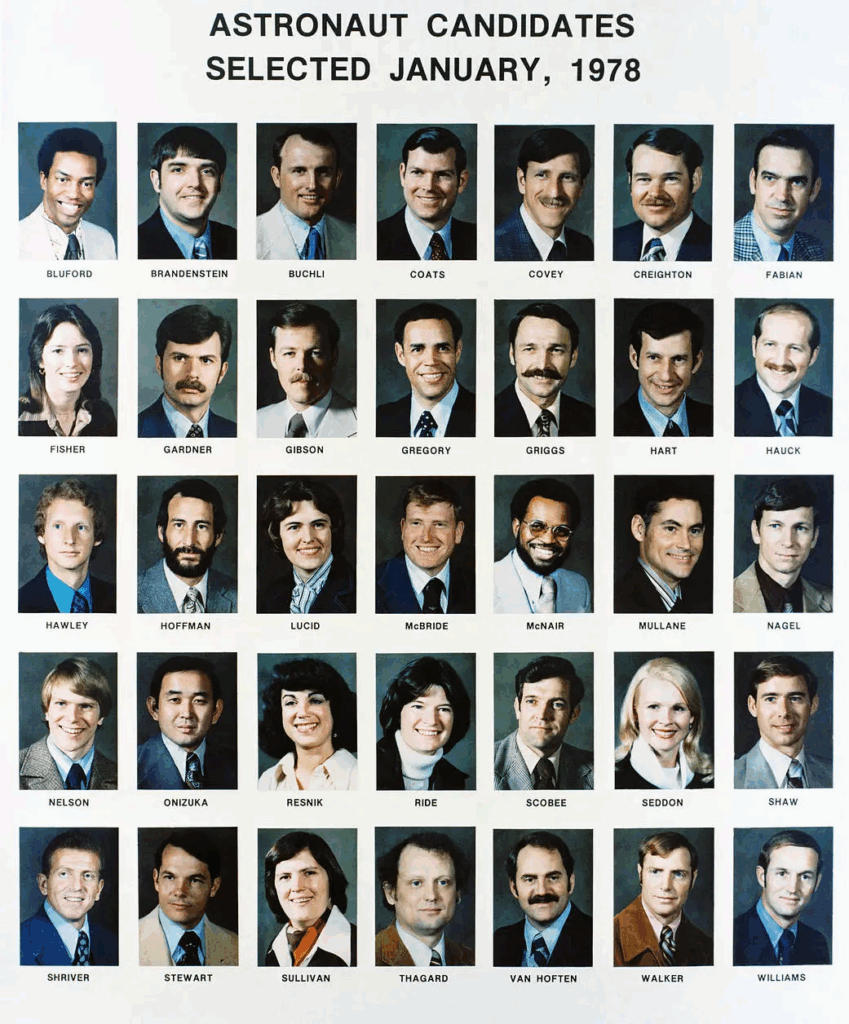
Figure 1. NASA Astronaut Group 8, or the Thirty Five New Guys. Image source.
In 1976, NASA put out a call for astronauts, and for the first time, encouraged women and people of color to apply. This important policy change was a direct result of the Equal Employment Opportunity Act of 1972, which made it illegal for employers to discriminate against women and people of color when hiring. In 1973, only 5.6 percent of the NASA staff was made up of people of color, only 18 percent were women, and none of these women or people of color were astronauts. It became a goal for NASA to recruit women and people of color for their new astronaut class. They were recruiting two different types of astronauts: pilots and mission specialists. Pilots would fly the spacecraft, command missions, and had to come from a military pilot background. Mission specialists would do experiments in space and help deploy satellites, among other duties. Mission specialists did not have to have military experience, and could be scientists from many different fields, including medical doctors, physicists, and biologists. Over 8,000 people applied to be a part of NASA Astronaut Group 8, but only 35 were selected.
The astronauts of NASA Group 8 would leave important legacies in many ways, including the first African American in space (Guion Bluford), the first mother in space (Anna Fisher), and the first Asian American in space (Ellison Onizuka). Additionally, more than half of the crew that was lost in the Space Shuttle Challenger Disaster in 1986 was composed of astronauts from NASA Group 8 (Dick Scobee, Judy Resnik, Ellison Onizuka, and Ronald McNair). All 35 astronauts in Group 8 would eventually fly in space, and 5 of these astronauts would receive the Congressional Space Medal of Honor, an extremely prestigious award given by the president to a very small group of astronauts who have gone above and beyond in their duties. The five astronauts from Group 8 to receive this award were the four to perish in the Challenger disaster, and Shannon Lucid. Lucid went to space 5 times and was the first woman to go on a long-term mission in space, spending 188 days on the Russian space station Mir.
NASA astronaut Group 8 included 6 women: Shannon Lucid, Judy Resnik, Anna Fisher, Rhea Seddon, Kathryn D. Sullivan, and Sally Ride (Figure 2). While each of these women went on to have successful careers as astronauts, Ride was selected to be the first of the group to go to space. Sally Ride was born in California in 1951. She was an avid tennis player and ranked in the top 20 players in the junior tennis circuit. Ride initially attended Swarthmore College, but finished her college career at Stanford University, receiving bachelor degrees in physics and English. She then went on to get both a masters and a doctorate degree in physics from Stanford. Her scientific experience and her physical fitness from being a lifelong athlete made her an exceptional candidate for a mission specialist.

Figure 2. The women of NASA Astronaut Group 8 and the first American female astronauts. From left to right: Rhea Seddon, Sally Ride, Kathryn Sullivan, Shannon Lucid, Anna Fisher, and Judy Resnik. Image source.
Ride was a part of mission STS-7 (Figure 3), which would launch a communication satellite. Ride aided in the launch of the satellite and helped run various experiments throughout the mission. STS-7 was a successful mission, and Ride showed NASA, and the world, that female astronauts are just as capable as male astronauts.
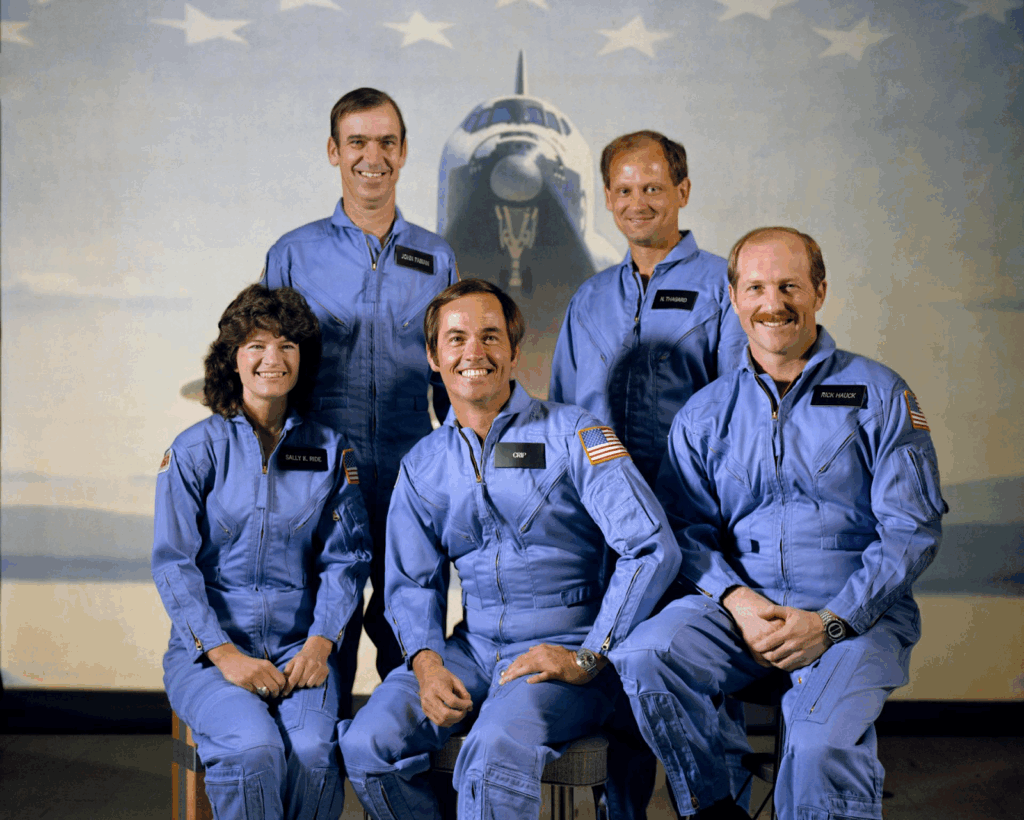
Figure 3. The crew of STS-7. Top row left to right: John Fabian and Norman Thagard. Bottom row left to right: Sally Ride, Robert Crippen, and Rick Hauck. Image source.
Ride’s legacy extends beyond just being the first American woman in space. She was the only person to serve as a member of both the committees that investigated the Challenger and the Columbia Space Shuttle Disasters. Ride was a physics professor at the University of California, San Diego after leaving NASA. In 2001, Ride founded Sally Ride Science, which is an organization focused on increasing the number of women and girls in science. Ride was focused on making sure that children of all backgrounds could see scientists who looked like them. While Ride is most famous for being the first American woman in space, her legacy is much broader than that one important moment in her career.
