Noun. /hi-POX-ee-ah/
by Hannah Thrash
What does it mean?
Hypoxia is a condition where the body experiences low oxygen. This can occur normally, like during exercise where the cells are using up oxygen faster than it can get to them, or abnormally, like during cancer. Cancer cells often are hypoxic in nature, meaning they are constantly under low oxygen, because their fast growth and ability to form tumors often prevents oxygen from getting to all the cancer cells equally. HIF-1α is a special protein that is present while cells are under low oxygen conditions and helps them survive until the oxygen conditions become normal again. Hypoxia is often paired with the word normoxia – which means regular oxygen levels.
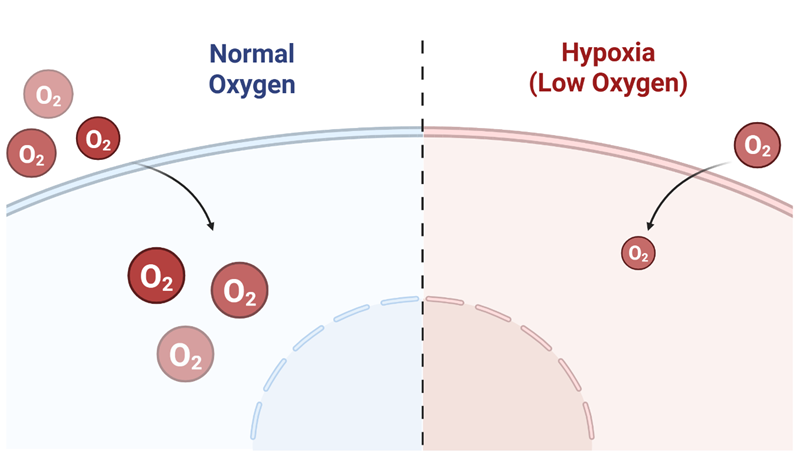
Figure 1: Under normal oxygen conditions, plenty of oxygen (O2) is available. In hypoxia, less oxygen is available creating a low oxygen condition. (Adapted by author from template in Biorender.)
How do I use it in a sentence?
“Becuase the tumor was so dense, we assumed that the inner cells were probably experiencing hypoxia.”
Etymology
From the Greek word “hypo” which means less, under, or beneath, and the word oxygen, which is French in origin. Taken together hypoxia literally means less oxygen.
History of usage
The study of low oxygen states was actually initiated in 1875 by scientist Denis Jourdannet who was studying the blood of people who live at high elevations, and therefore experience lower oxygen all the time. Many others contributed to the study of elevation and altitude and how these impact blood circulation and respiration. However, the word hypoxia was not used in science until 1938 by Danish scientists R Brinkman and JHP Jonxis who published a study in English about oxygen concentration in the blood of pediatric patients. (Read more here!)
Related terms
Oxygen
Cell stress
Hypoxic conditions
Nomoxia
HIF-1α
Cancer
Fields of study in which this word is commonly used
Biology
Cell Biology
Cancer Biology
Anatomy and Physiology
