by Erin Dickert
If you’ve tried one banana, you’ve tried them all. Technically. Accounting for almost 99% of all banana exports to North America and Europe, the Cavendish banana belongs to the “Cavendish” subgroup of the larger species Musa acuminata. However, these tasty, bright yellow fruits that have become a staple in the produce aisle look starkly different from the tropical wild bananas grown in South America.
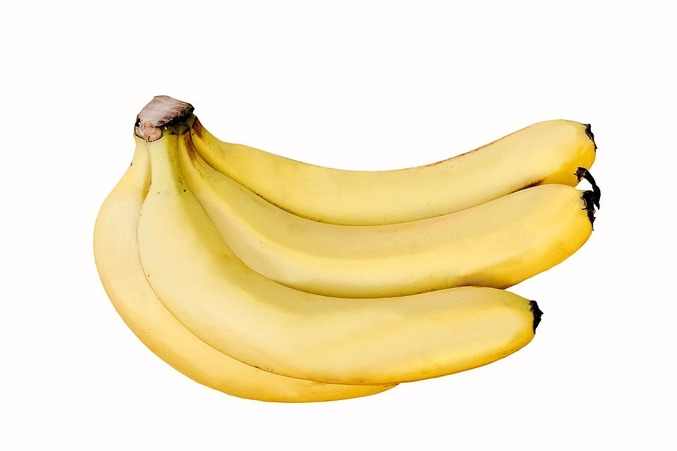
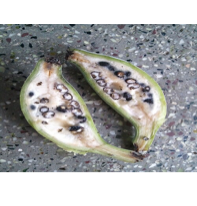
Figure 1. A common Cavendish banana and a Wild Banana with Seeds. (Image Sources: 1, 2)
Most notably, Cavendish bananas are seedless (Figure 1). This is due to Cavendish bananas being triploid, which means they have three sets of chromosomes in their cells. (In total they have 33). During meiosis, which is the process that generates sex cells for reproduction, organisms evenly divide their genetic material between daughter cells. However, because bananas are triploid, this renders them unable to evenly divide their genetic material between two daughter cells (Figure 2). Because of this, banana plants cannot generate viable seeds to sexually reproduce. This is beneficial for the export and sale of bananas, as consumers don’t encounter seeds. However, this also means that banana plants require human intervention to reproduce using genetically identical clones. Therefore, every banana sold in the supermarket is genetically the exact same.
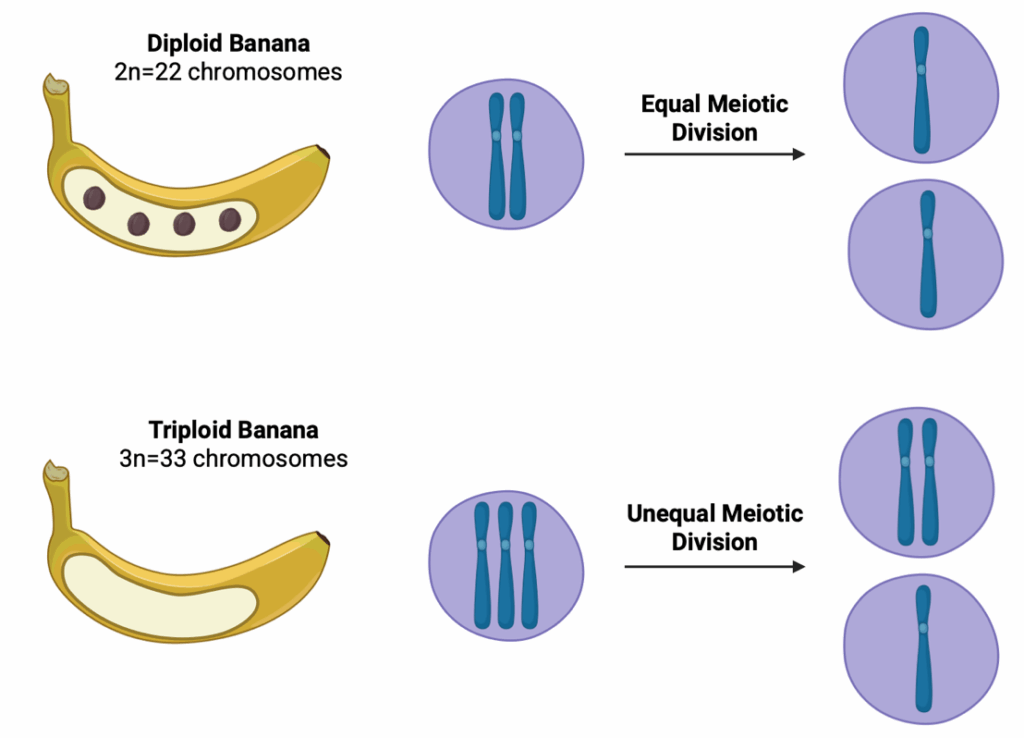
Figure 2. Triploid cells in Cavendish bananas are not conducive to sexual reproduction. Image created by author in Biorender.
As you might imagine, this makes the genetic diversity of the Cavendish banana quite low. But why does this matter? The Cavendish banana is particularly susceptible to two diseases: Black Sigatoka and Tropical Race 4 (Figure 3). Black Sigatoka is a leaf-spot disease that is caused by the fungus Pseudocercospora fijiensis that destroys the plant’s leaf tissue, impairing its ability to complete photosynthesis and reducing banana plant yields up to 50%. Current methods to curb Black Sigatoka include pruning plant leaves and applying fungicides. However, repeated application of fungicide can result in natural selection for the fungus, making strains that are resistant to the pesticide become more prevalent. Tropical Race 4 is caused by Fusarium oxysporum and attacks the banana plants in a different manner, invading the roots and stunting plant growth from the bottom up. Cavendish bananas are not naturally resistant to these fungi, leaving them extremely vulnerable to extinction.
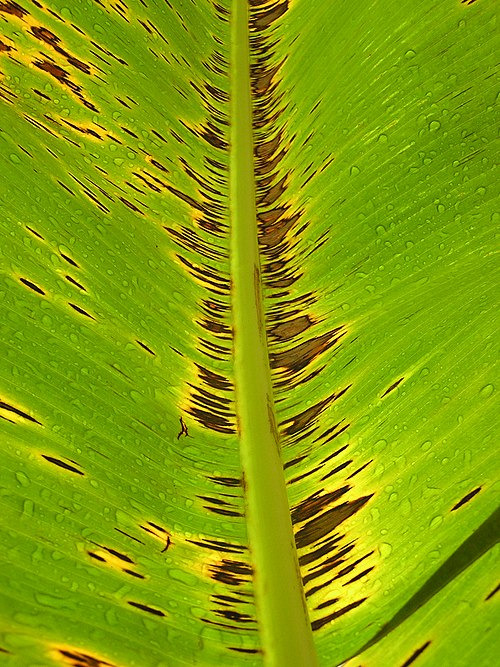
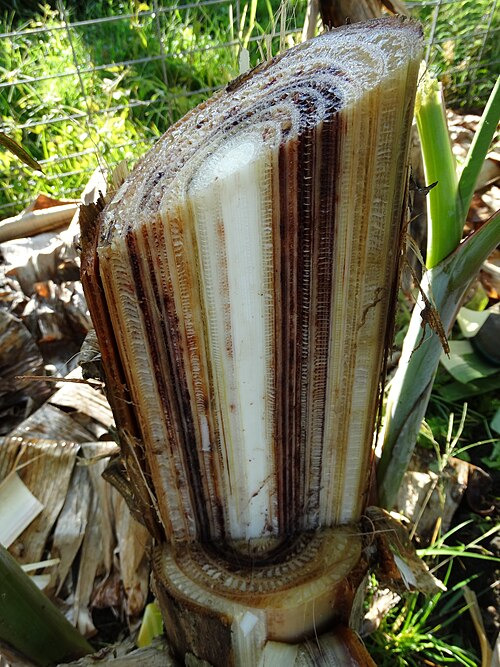
Figure 3. Representative Images of Black Sigatoka and Tropical Race 4-affected banana plants. (Source Images: 1, 2)
However, this problem is surprisingly not new. Before the Cavendish banana was the widely available banana variety, the Gros Michel or the “Big Mike” (Figure 4) banana variety, another triploid subspecies of M. acuminata, dominated the shelves. The dominant banana export until around 1950, the Gros Michel banana was wiped out by another fungus, Fusarium oxysporum f.sp. cubense that causes Panama disease. Cavendish bananas were able to be successfully grown in the same soil as affected Gros Michel bananas, allowing them to become the dominant variety.
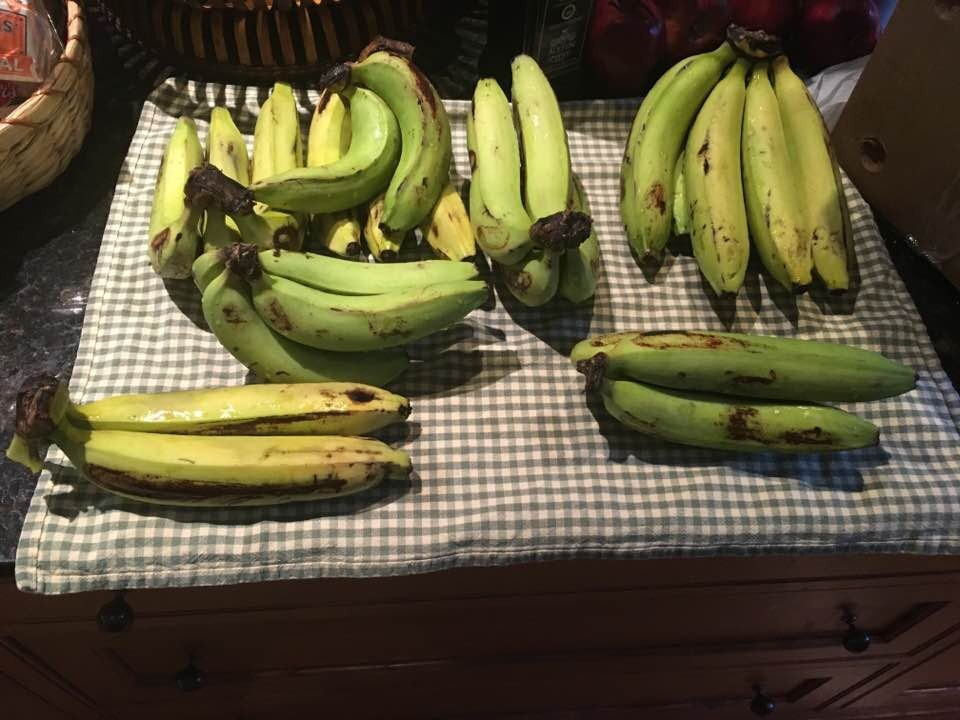
Figure 4. The Gros Michel banana variety. Source
Currently, there has been little effort put into collecting and characterizing the genetic material of commercial or wild bananas. However, we now have the genetic sequences of both the banana and the fungi that cause these diseases, providing information on how the fungi attack the plants. Additionally, researchers can find resistance genes to these diseases in wild bananas, and could potentially use plant breeding or genetic engineering to introduce these genes into cultivated bananas. Scientists today are also attempting to use genetic engineering techniques to avoid another commercial catastrophe. In 2017, researchers at University of Queensland in Australia were able to produce a banana that is resistant to Tropical Race 4. So, is history doomed to repeat itself? Hopefully with genetic engineering and increased access to research, we can enjoy banana splits for years to come!
No generative AI was used in the creation of this post.


-_Fusarium_wilt_(Panama_disease).jpg)
