noun. /dee-en-AY meth-uh-LAY-shuhn/
by Hazel Milla
What does it mean?
DNA methylation occurs when a methyl group (a group of atoms consisting of a carbon bonded to three hydrogens) attaches to cytosine, a type of nucleotide base, on a gene. It is a type of epigenetic modification, or in other words, a change to the genome that doesn’t affect the underlying DNA sequence. Methylation reduces the ability of DNA to interact with proteins that read it and transcribe it into RNA. The result is that the gene is less likely to be expressed as a protein.
How do I use it in a sentence?
Researchers can better understand how cardiovascular disease develops by identifying differences in DNA methylation between patients with the disease and healthy individuals. These differences indicate ways the environment shapes disease risk via epigenetic modifications.
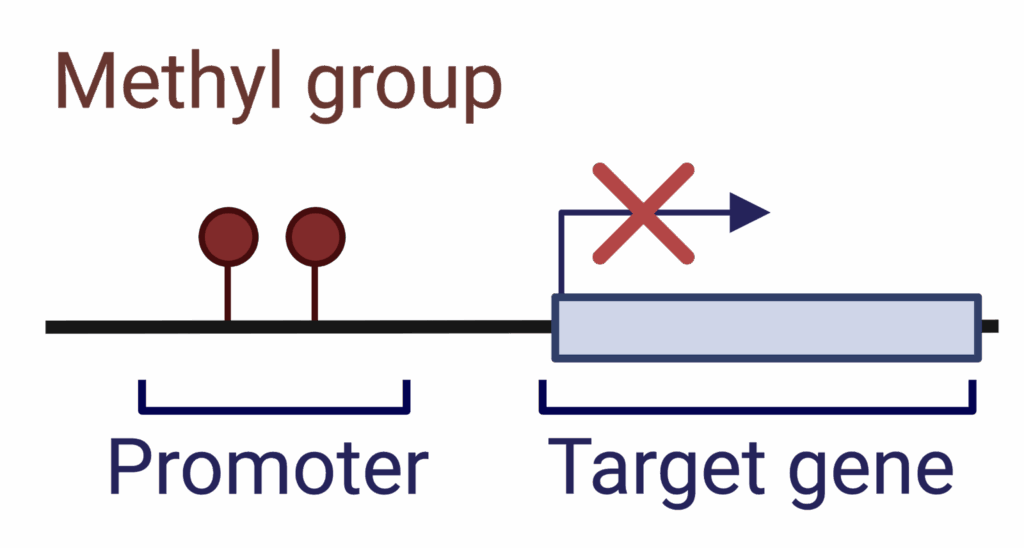
Figure 1. Effect of methylation on a gene. Methyl groups attached to a promoter region ultimately inhibiting gene expression. Image created by the author in Biorender.
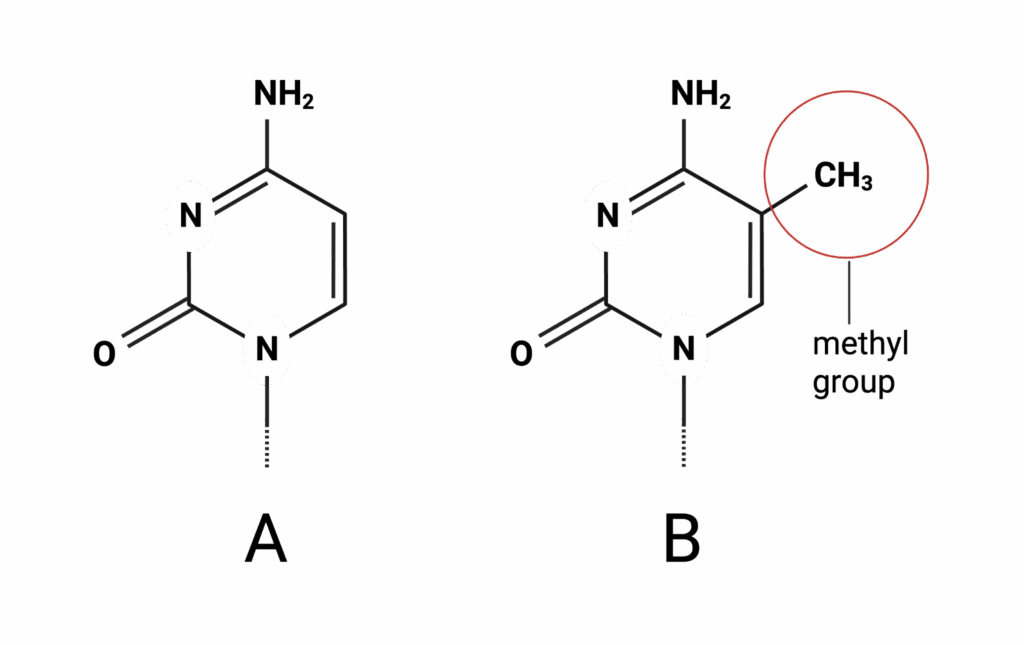
Figure 2. Biochemistry of methylation. A) Cytosine structure without a methyl group. B) Cytosine structure with a methyl group attached. Image created by the author using Biorender.
Etymology
The term DNA methylation consists of two components: DNA, which you can read more about here, and methylation. Methylation comes from “methylate,” to add a methyl group to something, and “ion,” which describes an action or condition.
Related terms
Epigenome
Epigenetic
DNA
Methyl group
Gene expression
Fields of study in which the term is commonly used
Genetics and epigenetics
Molecular biology
