by Siyao Wang
In the waters of temperate and tropical seas, there floats an inconspicuous creature. A tiny bell-shaped transparent jellyfish, with a maximum diameter and width of about 4.5 millimetres (0.18 in) and a bright red stomach, quietly feeds on zooplankton. It is this unassuming jellyfish, Turritopsis dohrnii (aka the “immortal jellyfish”), who is considered to be the only biologically immortal species on planet Earth. Most other living species undergo aging and death eventually, where their bodies gradually deteriorate and stop functioning. However, the immortal jellyfish is able to defy this process by reverting back to an earlier stage of their life cycle, turning back time.
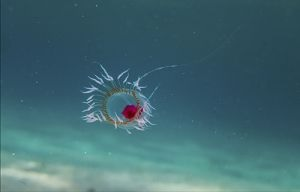
Figure 1: Turritopsis dohrnii. Image source
A new jellyfish life begins with a fertilised egg, which grows into a larval stage called a planula. After attaching itself to a surface such as a rock, ocean floor or a boat’s husk, the planula develops into a polyp: a tube-shaped structure with a mouth at one end and a kind of ‘foot’ at the other. One single polyp will grow into a colony by asexual reproduction. Once large enough, the colony will produce and release many identical newborn jellyfish (aka the medusa). The newborn jellyfish will become adults, release their eggs or sperm into the water, allowing external fertilization to produce more planula. The adult medusa is generally the final stage of a typical jellyfish’s life before it dies.
However, for T. dohrnii, life doesn’t stop here. When faced with some kind of environmental stress, like starvation or injury, instead of dying, it can revert back to being a tiny blob of tissue: It changes back into the sexually immature polyp phase of life. The reincarnated polyp eventually produces new medusae that are genetically identical to the previous version of the immortal jellyfish. This whole process of reverting back to a younger stage is called reverse metamorphosis. Think of an adult human reverting back to a baby and then regrowing back to an adult. Their ability to switch back and forth between life stages indefinitely in response to stress means that, except for being eaten by their predators or getting severely sick, they could theoretically live forever.
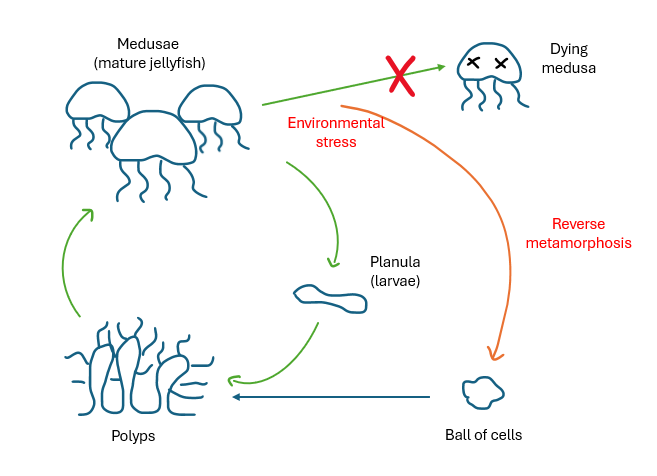
Figure 2: life cycle of Turritopsis dohrnii. Image created by author.
T. dohrnii’s unique ability has fascinated scientists for over 20 years, and has been cited in everything from TV series such as The Big Bang Theory to the McGraw-Hill Yearbook of Science and Technology. How does T. dohrnii do it? Scientists discovered that during this reverse metamorphosis, the jellyfish cells undergo transdifferentiation, where mature medusa cells transform back into stem-like cells or immature polyp cells, allowing for regeneration of a whole new body. A study finds that during this process, many genes involved in DNA repair and maintenance of the telomere, a protective cap found at the end of the chromosome to prevent fraying) are upregulated, while genes involved in certain cellular signaling pathways, cellular differentiation and cell division (mitosis) are downregulated.
Researchers are still investigating the superpower of T. dohrnii which has become a model to study aging, regeneration, and cellular reprogramming, the process of converting a cell into a different type of cell. The results of these studies harbor potential implications for biomedicine and longevity research, providing potential therapeutic targets for aging-related diseases or healthspan extension.

