by Natalie Thomas
Doctors, researchers, and many others in the biomedical field work hard every day to learn as much as they can about cancer: what causes it, how to treat it, and how to prevent it. While much of this research is done in the hopes of applying these findings to human disease, cancer is not specific to humans. Mammals, fish, birds, even plants and fungi are all susceptible to cancer to varying degrees, but some are more likely than others to develop this potentially dangerous disease. So, how can we leverage the knowledge gained about these differences across species to develop effective cancer treatments and save lives?
First, let’s talk about what cancer actually is. Simply put, cancer is the abnormal and uncontrolled growth of cells that are capable of invading the surrounding tissue and traveling to other parts of the body, a process known as metastasis. Whether we’re talking about breast cancer, brain cancer, or skin cancer, they all can fit under this definition, but they begin in that specific organ before spreading. Unique oncogenes in specific organs can cause different cancers, but most cancers generally start due to a mutation in the organism’s DNA. While there are some mutations that might affect the whole body and be passed down from parent to child, known as germline mutations, many cancers are caused by somatic mutations, or mutations that start in just one of your cells and then spread as that cell divides.
So, what does any of this have to do with whales? Meet the Bowhead whale (Figure 1). Bowhead whales live in Arctic and subarctic waters and can reach up to 62 feet in length. They can also live for up to 200 years! While commercial whaling severely depleted their population, from almost 50,000 to under 3,000 in just the 1920s, recent surveys suggest that the number of bowhead whales is again rising, with an estimated 12,500 whales alive today.
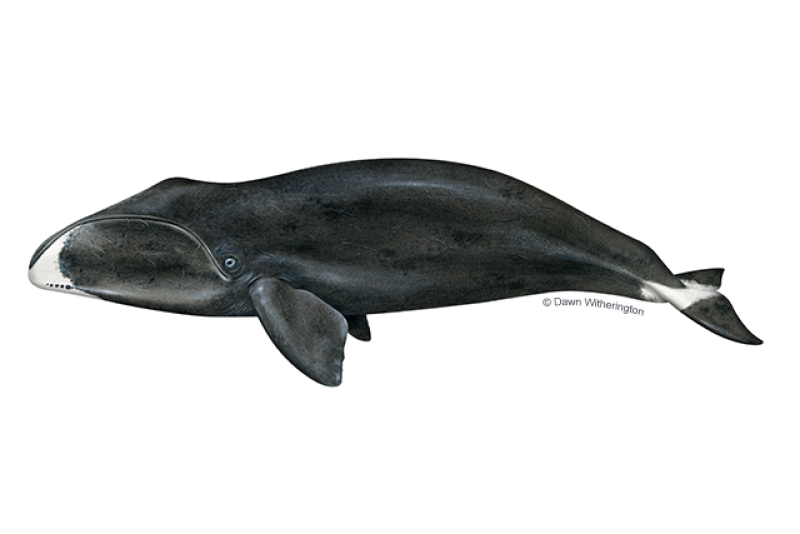
Figure 1: A drawing of a Bowhead Whale. Image source
Whales are obviously massive creatures, the bowhead whale included. With all of the cells that make up these whales, we would expect them to have more somatic mutations in their bodies. However, these whales have extremely long lifetimes, and very rarely seem to get cancer. This is referred to as Peto’s paradox. Several solutions to this paradox have been proposed. For example, a tumor must be substantially larger in a whale to have a negative effect compared to the size of tumors in humans, so maybe there is a limit to how big a tumor can get and how many cells a tumor can contain. More current research hypothesizes that instead, these large animals have developed biological defenses against somatic mutations that humans and other small animals lack.
Recently, a paper came out looking into this hypothesis specifically in the bowhead whale. They were able to identify a specific protein called CIRBP that allows whale cells to repair damaged DNA much more efficiently than human DNA repair mechanisms. They even performed an experiment in which they added this protein to human cells in a dish, and these cells became more resistant to DNA mutations. When they introduced the gene into fruit flies, they even lived longer!
We are a long way away, both scientifically and ethically, from being able to introduce a whale protein to humans as a potential cancer prevention method and life extender. We may never reach that point, but thinking about the ethical implications is a fun exercise. Additionally, this research does show that human DNA repair has a lot of room for improvement. Studying the world around us and keeping an open mind to all possibilities is how we make advances in science. Even when, on the surface, studying whales seems unlikely to have an impact on human health, we still have so much to learn.
