(noun. /ZAI-gote/)
by Ana Cunningham
What does it mean?
A zygote is the technical term for a fertilized egg. In diploid (2n) organisms, two haploid (1n) gametes fuse to form a zygote.
Most animals are diploid, meaning most cells within the organism contain two copies of chromosomes. In these animals, the zygote is formed by the fusion of a male gamete (sperm) and female gamete (egg), each contributing one chromosome copy. However, exceptions to this rule are found everywhere across the tree of life. For example, several species of bees, snakes, lizards, and even sharks reproduce by parthenogenesis, in which a single gamete develops into an embryo.
How do I use it in a sentence?
“The zygote formed by the fusion of two gametes that will eventually develop into an embryo.”
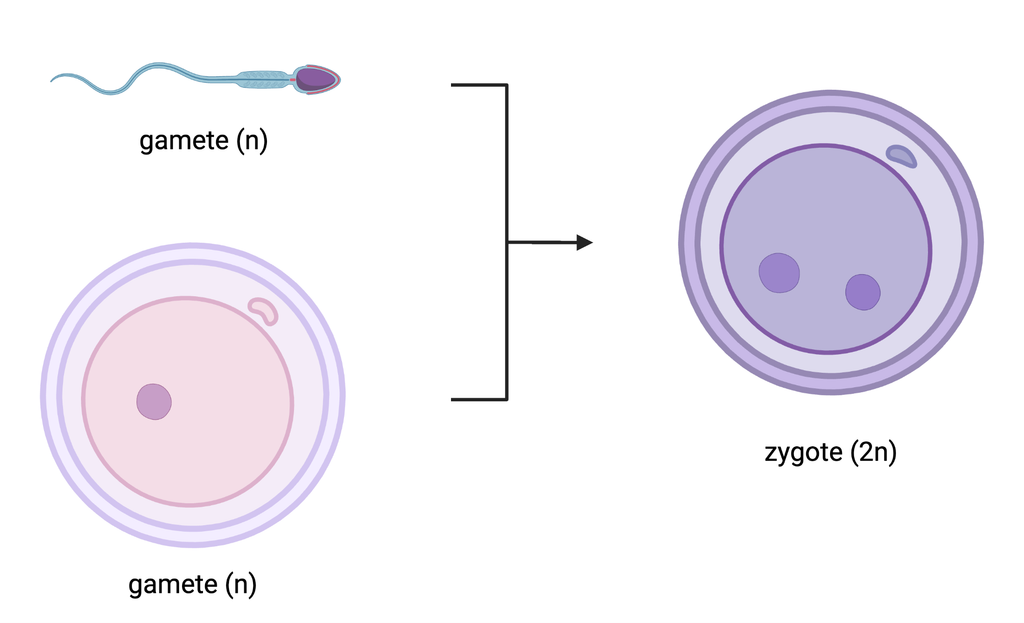
Figure 1. Diagram of two mammalian haploid gametes (n) fusing to form a diploid zygote (2n). Image is the author’s own work.
Etymology
Zygote comes from the Greek word zygotos, meaning “joined,” in reference to the joining of two gametes.
Related terms
Gamete; embryo; ploidy
Misconceptions (about word usage)
In everyday use, zygote is sometimes confused with the word embryo, particularly in the context of pregnancy and fertility science. Zygote refers simply to the single diploid cell formed by the fusion of two gametes, while an embryo is multicellular. In mammals, a zygote becomes an embryo after multiple rounds of cell division followed by implantation in the uterine wall.
Fields of study in which this word is commonly used
This term is most commonly used in the fields of genetics and developmental biology.
