By Ana Cunningham
Most people probably remember learning the saying, the mitochondria is the powerhouse of the cell*. But what does that really mean? How do mitochondria function inside cells, and how do they work with other organelles to carry out cellular functions like repair, waste removal, and mitosis?
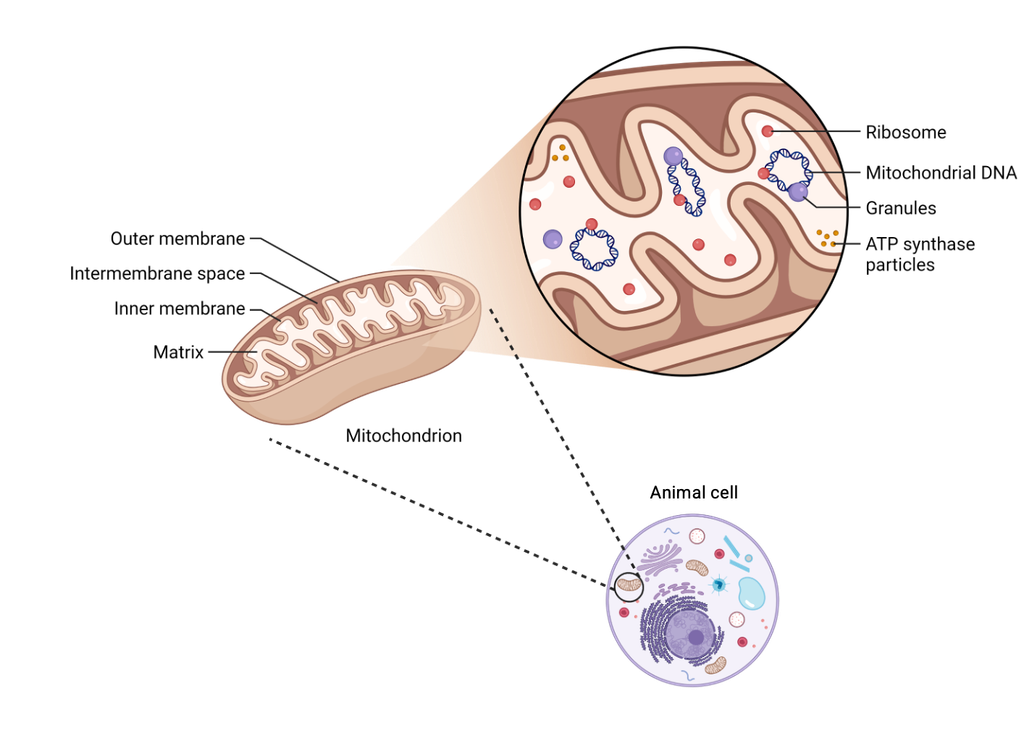
Figure 1. Diagram of a singular mitochondrion in an animal cell. Image was created using BioRender.
Mitochondria are membrane-bound organelles that make most of the chemical energy the cell needs to survive. They are composed of an outer membrane, an intermembrane space, an inner membrane full of folds called cristae, and an inner mitochondrial matrix (Figure 1). The matrix contains ribosomes for making proteins, granules that help process nucleic acids and lipids and support enzyme activity, ATP, and mitochondrial DNA. In animals, mitochondria are the only organelles besides the nucleus that are double-membraned! As an interesting side note, the presence of mitochondrial DNA and the double membrane are two of the most compelling pieces of evidence that mitochondria came from an ancestral prokaryotic cell.
The term “powerhouse of the cell” comes from the main job of mitochondria: to produce ATP (adenosine triphosphate). ATP is an energy-rich molecule that the cell uses to carry out daily functions and is essential for the growth and survival of the cell. Mitochondria produce ATP through a series of complex biochemical reactions that are generally described as glycolysis, the citric acid cycle, and oxidative phosphorylation (Figure 2). Glycolysis is the process that breaks down sugar molecules (glucose) into byproducts that are transferred to the mitochondrial matrix. Inside the matrix, the citric acid (or TCA) cycle converts these molecules into high-energy electron carriers NADH and FADH2. Finally, oxidative phosphorylation uses the energy from these electron carriers to pump protons across the inner mitochondrial membrane and produce ATP. This explains why mitochondria have all those funny folds: since ATP synthesis occurs across the inner membrane, having more folds creates more room to synthesize more ATP.
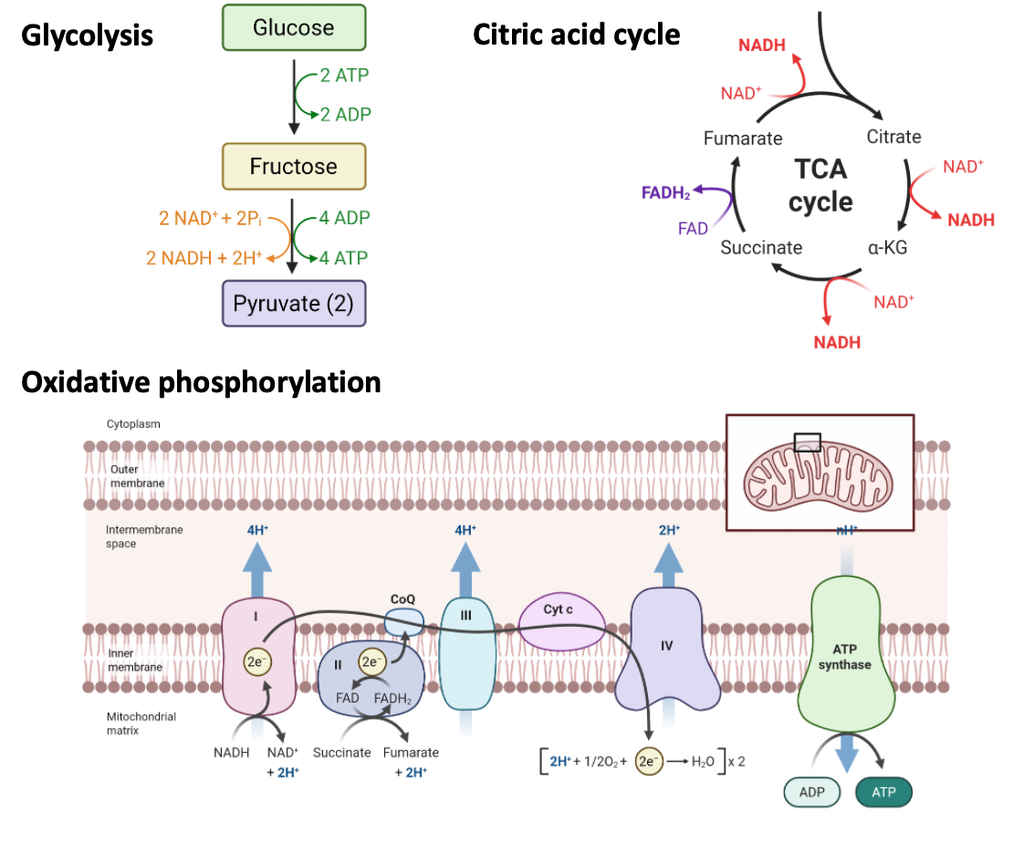
Figure 2. Overview of the main biochemical reactions required to produce ATP. The image was created using BioRender.
Recent research on mitochondrial biology demonstrates that these organelles are far more dynamic than previously thought. Besides producing ATP, mitochondria are biochemical factories that produce many other compounds, including parts of heme, the molecule that gives your blood its red color. Mitochondria also respond to cell signals by dividing (mitochondrial fission) or combining with other mitochondria (mitochondrial fusion) to meet the cell’s energy demands and respond to cellular stress. For instance, if a mitochondrion becomes damaged, it might fuse with another healthier mitochondrion to continue producing ATP. On the other hand, if the damage is more severe, mitochondria might undergo fission to increase ATP production to repair other parts of the cell (Figure 3). In some cases, apoptosis is initiated by the fission of mitochondria into smaller and smaller compartments – like an extreme case of stress leading to fission – releasing their insides into the rest of the cytoplasm.
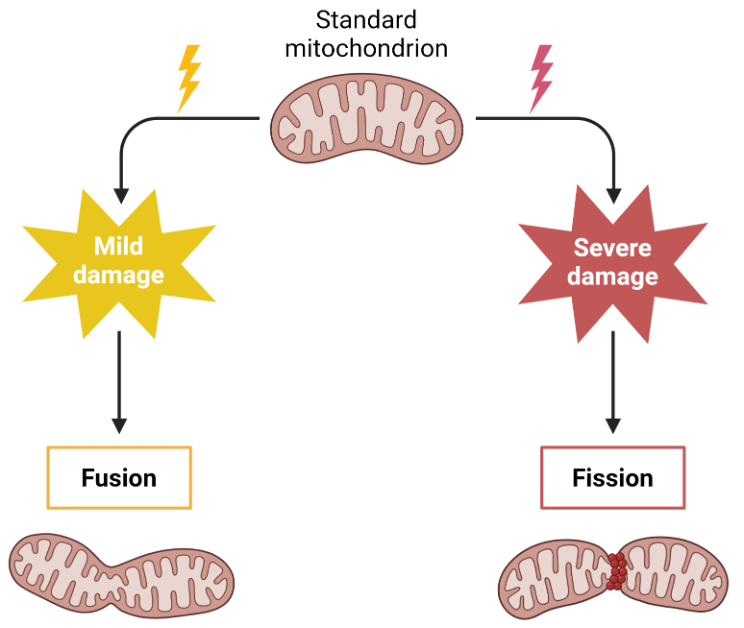
Figure 3. Mitochondrial fission and fusion in response to cellular stress. Image is from BioRender.
As you can see, mitochondria are much more than simply the “powerhouse of the cell.” It’s true that they are responsible for powering the cell by producing ATP, but they do so much more. These dynamic organelles synthesize a huge range of compounds that help the cell survive, grow, divide, and eventually die via apoptosis. The more we learn about mitochondrial biology, the more we realize there is still to be uncovered!
*Technically, mitochondria is the plural form of the organelle, so really the mitochondrion is the powerhouse of the cell. Most cells contain hundreds of mitochondria, so maybe it would be more accurate to say mitochondria are the powerhouses of the cell, but we digress.
