Noun. /hunt-ih-tin/
by Anca Frasineanu
What does it mean?
Huntingtin is a protein required for neuronal health, especially for the communication between neurons (synapses). Specifically, one example of huntingtin’s function is in making sure that synapses have enough compounds nearby to properly fire (it helps maintain the pool of synaptic vesicles by regulating their clathrin-mediated endocytosis). Huntingtin is well studied because mutations in the huntingtin gene (HTT) cause Huntington’s Disease, a progressive condition with motor deficits and cognitive dysfunction.
How do I use it in a sentence?
“Huntingtin is one of the essential proteins that allow the cells in our brains to properly communicate with each other.”
“Mutations in the HTT gene (specifically polyQ expansion), which encodes for huntingtin, cause a progressive neurodegenerative condition, Huntington’s disease.”
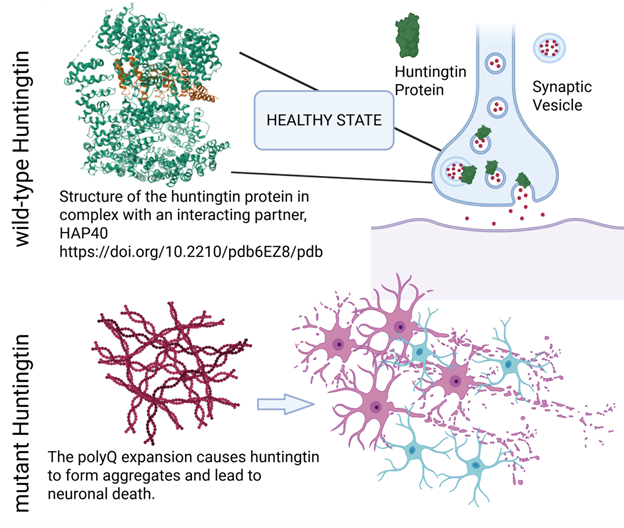
Wild-type (normal, non-mutated) huntingtin (structure taken from the Protein Data Bank) helps maintain neuronal health by regulating the synaptic vesicle pool. In contrast, mutant huntingtin misfolds and causes neuronal death. Image created by author using BioRender.
History of usage
Medical Doctor George Huntington first described the inheritance pattern of this neurodegenerative disease in the Medical and Surgical Reporter of Philadelphia Journal in 1872. Researchers then identified the gene responsible for this disease in 1993, and called it huntingtin.
In September 2025, uniQure announced promising patient data from a clinical trial of the first gene therapy for Huntington’s Disease.
Related terms
HTT gene
CAG/polyQ repeat
Gain-of-function mutation
HAPs (huntingtin-associated proteins)
IT15 (original name given to the HTT gene)
Fields of study in which this word is commonly used
Neuroscience, Cell Biology, Medicine
