by Claire Greene Whitfield
What is autophagy? It may surprise you to learn that all of our cells have a built-in process for breaking themselves down. The word autophagy itself has Greek roots with ‘auto’ meaning self and ‘phagy’ meaning to eat or eating. It may sound like something out of a horror movie, but autophagy is a part of everyday functioning for healthy cells. Think about it more like recycling or taking apart building blocks to make something new (Figure 1). As the different parts of our cells become worn out, they can be broken down and reused!
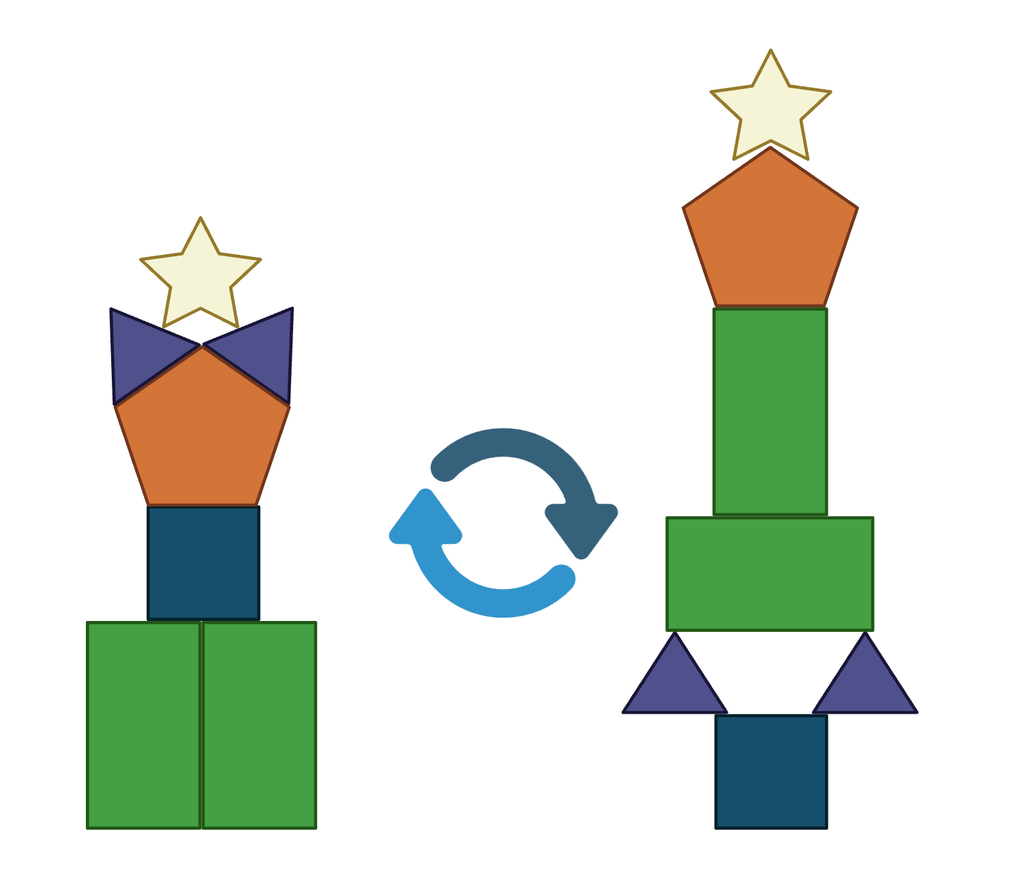
Figure 1. Autophagy is similar to recycling. Cells can take apart one structure and use those parts to make another. Image created with Biorender.
When does it happen? And why? Autophagy is going on all the time to help maintain homeostasis or balance. Cells are always using nutrients and energy to build proteins, nucleic acids, fats, and carbohydrates (these are called macromolecules). Instead of starting from scratch every time, they have the ability to break down old or unneeded components to their base macromolecules. This is more efficient and less ‘expensive’ from an energy standpoint. Think of it like Legos. When you want to build something new, you can break apart other things you’ve built without having to go out and buy more Legos – less effort and less expensive.
How does it work? Inside each cell, there are pockets of digestive enzymes called lysosomes that can break down anything the cell would like to recycle. Once the cell decides what to break down, it will form an autophagosome (Figure 2) around it, enclosing the unwanted molecules. The autophagosome will then fuse with the lysosome so the enzymes inside it can break everything down. Those base macromolecules can then be repurposed as needed! An example of this is when a virus damages parts of our cells during an infection, our cells need a way to break down the virus and “trash” it generated along the way!
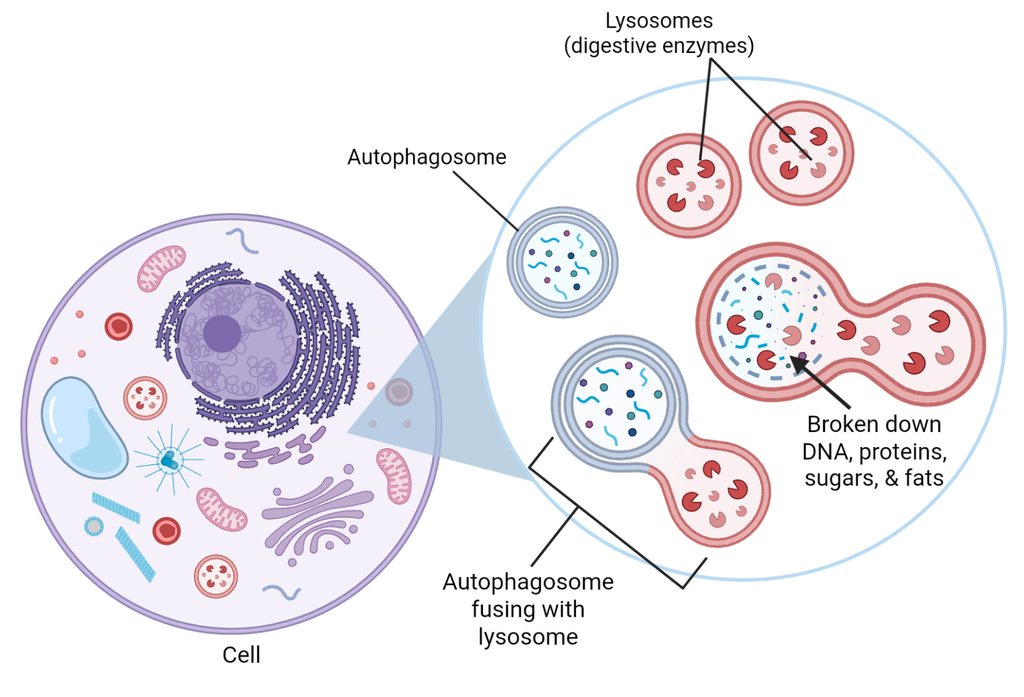
Figure 2. Cells decide what to break down by creating an autophagosome, then fusing with a lysosome. The broken down components can then be recycled. Image created with Biorender.
Why is it important to understand? So we know that autophagy happens and that it’s a part of everyday cell activities. Why do scientists bother researching it if we know the basics? Autophagy is actually connected to a variety of human diseases like cancer, Alzheimer’s, and heart disease. Cells cannot properly function with old or broken machinery so autophagy makes sure that the moving parts of the cell are fresh and functional.
