(noun /Hoe-mee-oh-stay-sus/)
by Hazel Milla
What does it mean?
Although your external environment may fluctuate, biological processes help to maintain the body’s steady internal state. This concept is called homeostasis. Homeostasis works through positive feedback loops, in which the signals from a biological process amplify that process, and negative feedback loops, which reverse the biological changes that trigger them, bringing the body back to a balanced state. An example of positive feedback is how, when a bleeding injury occurs, the process of blood clotting triggers additional blood clotting until the bleeding stops. Inflammation also operates through a positive feedback loop, as immune cells secrete factors that recruit more immune cells to the site of inflammation.
Negative feedback mechanisms include sweating to reverse overheating and shivering to reverse a drop in body temperature, processes which are part of thermoregulation. Additional examples include increased thirst in response to dehydration, increased breathing during exercise, and changes in blood vessel size in response to blood pressure levels. These are just some of the many homeostatic mechanisms that help keep our bodies alive and functional in dynamic environments.
Beyond biological function at the organism level, the term homeostasis can also be applied to ecology, describing the process by which ecosystems remain stable.
How do I use it in a sentence?
“Stress occurs when there is a challenge to homeostasis.”
“Homeostatic mechanisms help the body regulate a steady internal temperature.”
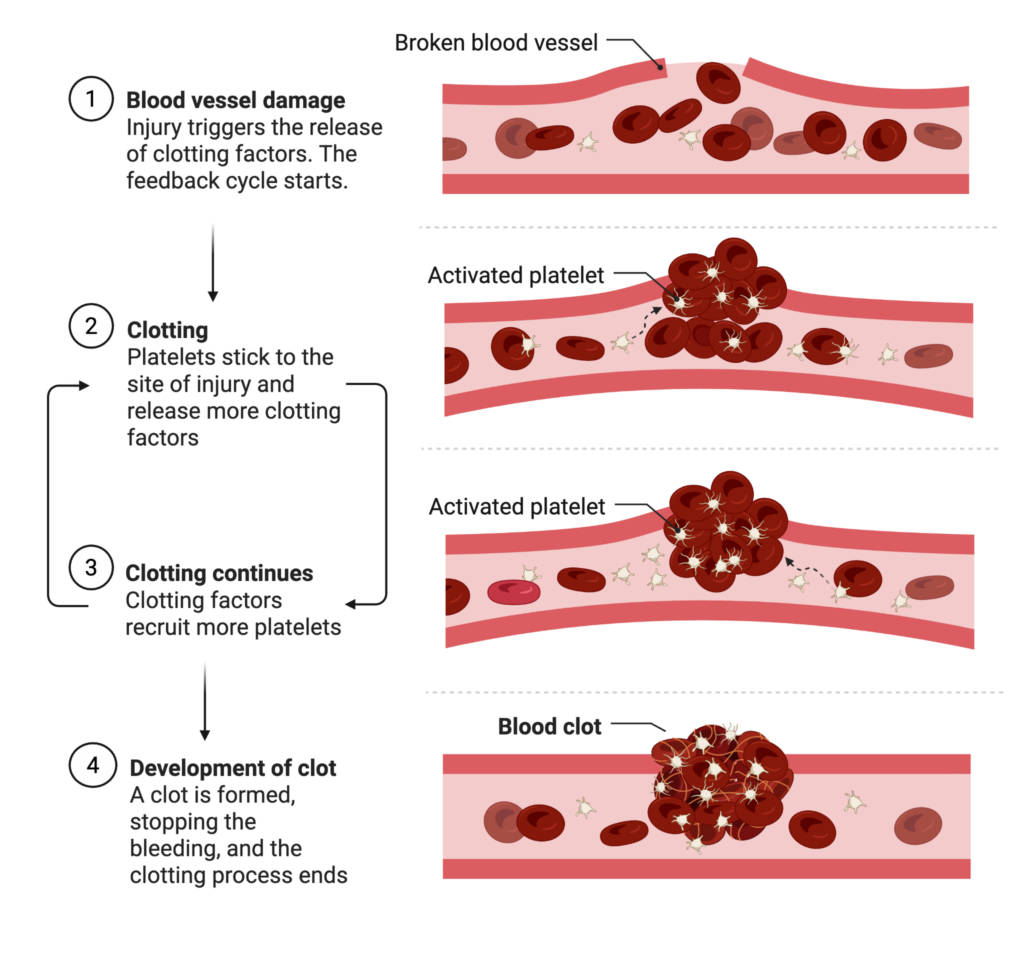
Figure 1. Blood clotting is an example of a positive feedback loop. Figure adapted by author in BioRender.
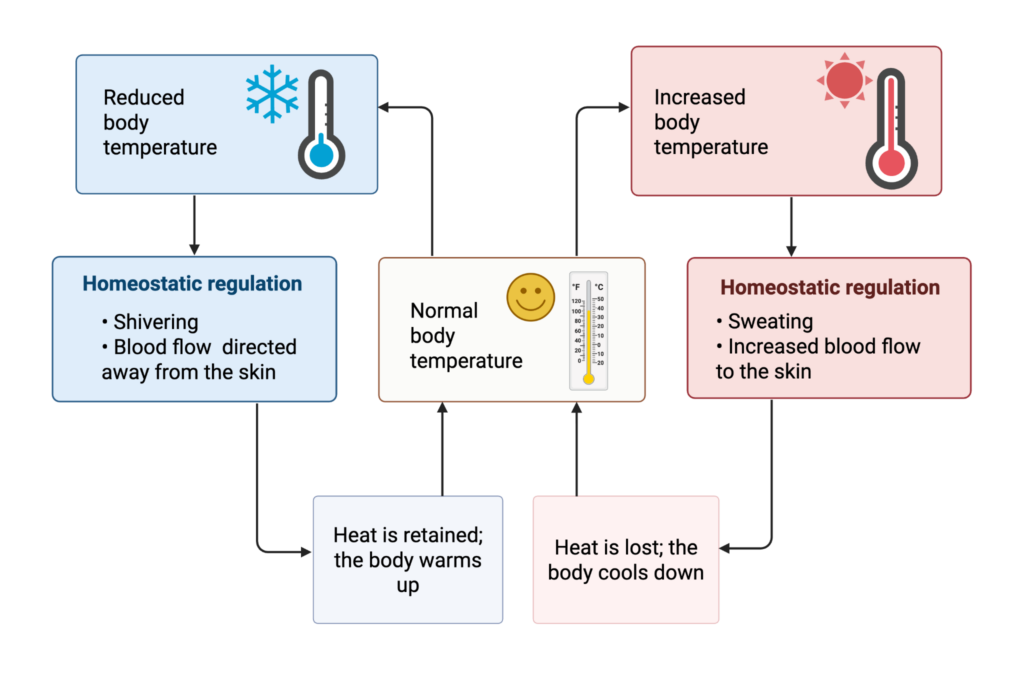
Figure 2. Types of thermoregulation (processes that heat or cool the body to regulate temperature) are examples of negative feedback loops. Figure created in Biorender by the author, adapted from source.
Etymology
“Homeo” comes from the Latin and Greek words for “same.” “Stasis” refers to a state of stability and is derived from the Greek word “histasthai,” meaning to stand.
History of usage
In 1926, the term “homeostasis” was coined by physiologist Walter Cannon (1871–1945). Cannon used this word to refer to the idea that the body works to maintain a steady internal state, originally developed by physiologist Claude Bernard (1813–1878).
Related terms
Misconceptions
Homeostasis is sometimes confused with allostasis. Allostasis is the concept that the body changes in response to challenges rather than maintaining a single steady state. For example, activation of the stress response induces changes in the body different from the typical homeostatic state, facilitating adaptation to challenges.
Fields of study in which this word is commonly used
Biology
Ecology
