by Hazel Milla
Fun Rating: 4/5

Difficulty Rating: 4/5
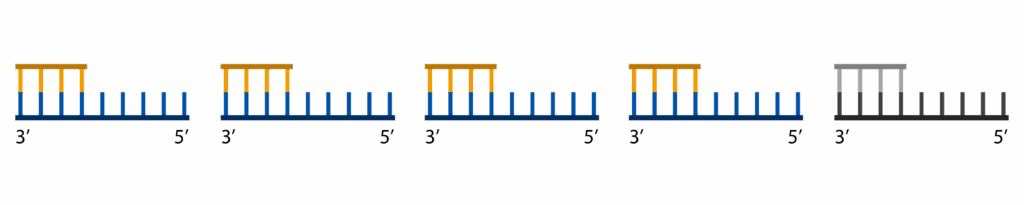
What is the general purpose?
Long-read whole-methylome sequencing (WMS) is similar to whole-genome sequencing, but instead of sequencing only the genome, it also measures a type of modification that occurs in genes. This modification, called DNA methylation, occurs when methyl groups attach to DNA, altering how much it is transcribed. By measuring this marker, scientists can identify biological patterns associated with disease and various traits. Nanopore sequencing is one of several methods for performing WMS.
Why do we use it?
Epigenetic modifications are chemical changes to the genome that influence how much of a gene is converted into protein without altering the gene itself. They can reflect how different biological and environmental factors, such as aging or cigarette smoking, affect gene expression. They can also be linked to certain diseases or used to predict disease risk. Collectively, these modifications make up the epigenome. One such change, DNA methylation, has been widely studied to understand how the body and environment modulate gene expression and how these processes go awry in disease. The collection of DNA methylation levels across the genome is referred to as the methylome.
How does it work?
To measure the methylome using nanopore technology, DNA strands are drawn through a type of protein that naturally occurs in biological membranes. These proteins, called nanopores, act like tunnels that let molecules travel from one side of the membrane to the other. Nanopores for sequencing have been specifically designed to analyze DNA and RNA.
Steps
1. Sample collection and prep
First, we collect our sample, which is often blood. Once we have the sample, we extract DNA to isolate it from other molecules (Figure 1A). Then, we add synthetic DNA paired with a motor protein that unwinds the DNA. These pieces of synthetic DNA are called adapters (Figure 1B), which play a key role in the next step, sequencing.
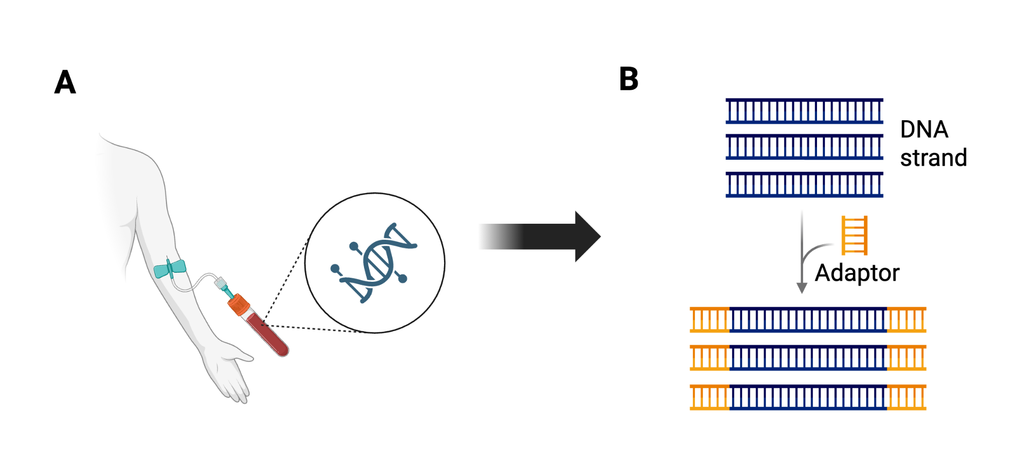
Figure 1. Sample collection and prep. A) The sample is collected, followed by DNA extraction and assessment of DNA quality, quantity, and weight. B) Adapters are attached to the ends of the DNA. Figure created by the author using BioRender.
2. Sequencing
The sample is loaded into a specialized chamber, called a flow-cell, which contains a membrane embedded with up to thousands of nanopores. Inside the flow-cell, each adapter links the motor protein to a nanopore. The motor protein ‘unzips’ the DNA at a controlled pace (Figure 2A). The flow cell’s membrane is biased with a voltage, creating an ionic current through each nanopore. This current pulls the negatively charged DNA strand through the membrane. As the DNA moves through the nanopore, it disrupts the ionic current, creating a signal called a “squiggle” that a sensor reads. We can figure out the structure of the DNA based on these squiggles (Figure 2B).
Figure 2. Sequencing. A) The motor protein unwinds the DNA and controls how fast it is drawn through the nanopore as a voltage is applied to the flow-cell. B) The sequencer outputs “squiggles,” a distinct change in current that occurs when DNA passes through the nanopore. Figure created by the author using BioRender.
3. Data processing and analysis
Squiggles operate similarly to fingerprints. In their original form, fingerprints appear meaningless. However, they become meaningful when we match people to their fingerprints using a database. Similarly, squiggles must be processed into sequences, also called “reads,” using specialized algorithms. These algorithms decode both the nucleotides and their epigenetic modifications. Then, we compare our results to a reference genome in a process called mapping, and label the gene names in a process called annotating. This lets us identify the genes and genomic elements in each read.
Once we have our processed reads, we can look for methylation patterns associated with certain traits and diseases. For example, researchers have used long-read nanopore WMS to identify genomic regions with different methylation levels in the brains of people with early- versus late-stage Alzheimer’s Disease.
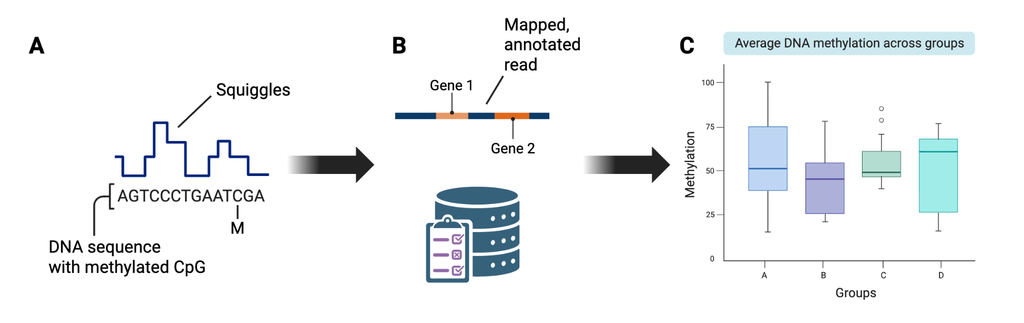
Figure 3. Data processing and analysis. A) “Squiggles” are converted to reads, which consist of the DNA sequence and methylation status. B) The reads are mapped to a reference genome and annotated, then filtered and processed to ensure quality. C) DNA methylation data are usually analyzed across groups based on treatment, disease status, or traits such as age or smoking behavior. Figure created by the author using BioRender.
Long-read nanopore sequencing technology offers many exciting possibilities, from mapping uncharted areas of the genome and methylome to distinguishing different DNA methylation types. Scientists are using this technology to better understand complex gene-environment interactions that are essential to development, aging, and health.
Edited by Christine Side and Yasemin Cole
No generative AI was used in the creation of this post.
