Noun. /MEW-kuhs/
by Hailey Dodson
What does it mean?
Mucus is a gel-like network that serves as a protective and lubricating barrier for the mucosal surfaces in our body. This viscous network is composed primarily of water and entangled mucin proteins, both secreted and bound to the outer surface of epithelial cells. The matrix traps pathogens, environmental allergens, native microbes, and shed epithelial cells, facilitating their removal and maintaining a healthy environment.
How do I use it in a sentence?
“Pathogens that we inhale are trapped by the mucus lining our nasal passages and airway so that they may be expelled by sneezing or coughing.”
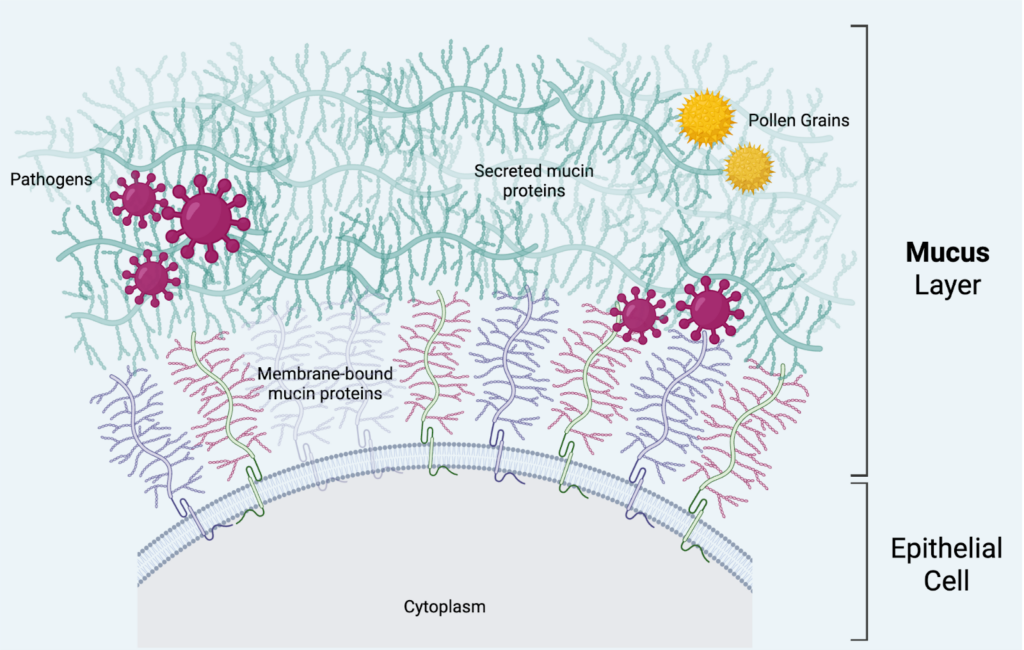
Figure 1. Airway Mucus Barrier Network. Schematic of the outer surface of an airway club cell. A mucus layer sits above the membrane of the cell, composed of large membrane-bound and secreted mucin proteins. Mucin proteins are entangled creating a dense network, with trapped pathogens and pollen grains.
Image created by author using BioRender.
(Optional) Additional sections:
Related terms
Mucin
Sputum
Congestion
Misconceptions (about word usage)
People often think of mucus as a uniform gel produced in the nasal passages during illness; however, mucus is continuously produced in numerous organs, such as the gastrointestinal tract, pancreas, and reproductive tract, even under healthy conditions. Mucin protein composition and biophysical properties vary by tissue. For example, mucus found in the airway is more fluid and thinner and is composed of two primary types of mucin proteins, whereas mucus in the intestinal tract has a thicker, gel-like structure and is composed of more than five different types of proteins.
Fields of study in which this word is commonly used
Cell Biology
Pulmonology
Physiology
