Noun. /dis-by-OH-sis/
by Hailey Dodson
What does it mean?
Our bodies are filled with trillions of microorganisms on our skin, in our mouth, in our digestive tract, and more. These tiny organisms include bacteria, fungi, and viruses that form communities, called the microbiome, that support essential health functions and can cause negative health outcomes when the ecosystem is disrupted. Dysbiosis disrupts the normal balance and function of these microbes. Dysbiosis has been associated with a variety of health conditions; however, microbial community composition varies from person to person, so scientists are still exploring what these microbes do and how they interact with the rest of the body.
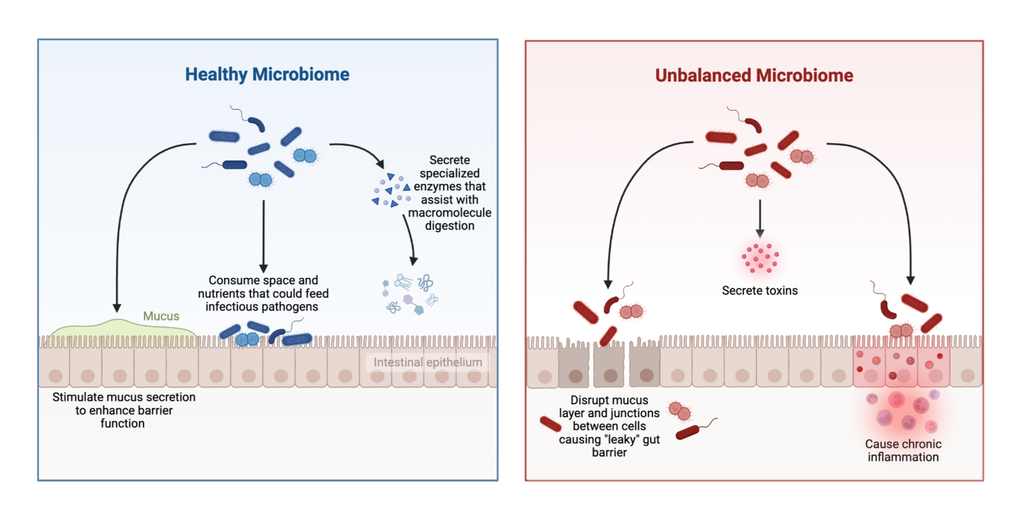
Figure 1. A healthy gut microbiome compared with dysbiosis. In a healthy gut, microbes can secrete specialized enzymes that support digestion, compete with potentially harmful microbes for space and nutrients, and help maintain the protective mucus and intestinal barrier. During dysbiosis, changes in the microbial community can disrupt these helpful functions. Microbes may produce harmful toxins, cause a leaky barrier, and promote long-term inflammation. Image created by the author using BioRender.
How do I use it in a sentence?
“Taking antibiotics can change the population of bacteria living in the gut and can occasionally lead to the unintended effect of dysbiosis.”
Etymology
The term dysbiosis comes from Greek, combining the prefix dys-, meaning “bad,” and bios, meaning “living.”
Misconceptions (about word usage)
A common misconception is that dysbiosis means all the “good” bacteria in a microbiome have been replaced by “bad” bacteria; this oversimplifies how microbiomes work. The same microbe can have both negative and positive effects depending on its environment and interactions with the surrounding microbes. No established recipe exists for a healthy microbiome; instead, scientists and doctors must assess changes in the microbial community as a whole and how those changes affect the body.
Related terms:
Microbiome, Microbe, Bacteria, Fungi, Virus
Fields of study in which this word is commonly used:
Microbiology, Immunology, Gastroenterology, Ecology
