By Erin Dickert
Rudolph the red-nosed reindeer had a very shiny nose, but did you know that he also had striking blue eyes? Depending on the season, reindeer (Rangifer tarandus) eyes can either have a shimmering gold-turquoise shade or a deep blue color (Figure 1). Unlike Rudolph’s red nose, this color change is not due to magic, but rather the changing of the seasons, as summer shifts to winter.
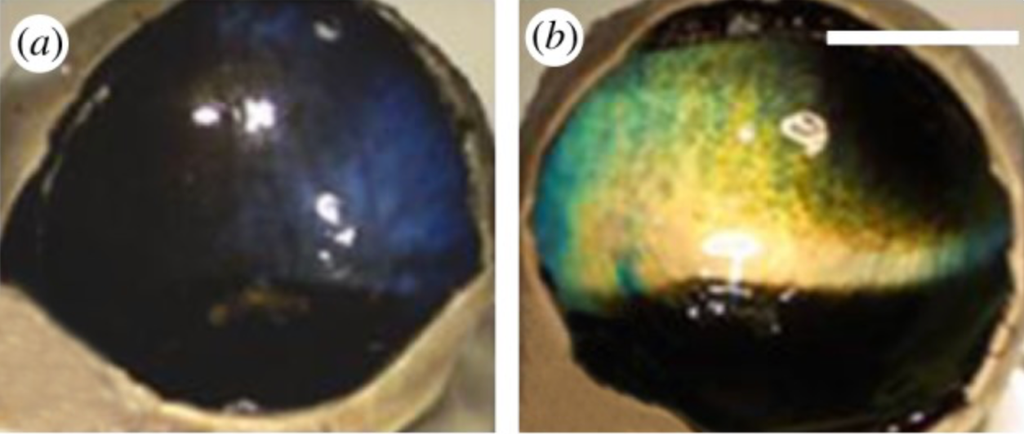
Figure 1. The eyes of a reindeer from the winter (a) and summer (b) months. Source
Animals that live above the arctic circle, like reindeer, face unique challenges to their survival. The arctic summer months boast almost permanent daylight, while winter brings near constant darkness. When the sun sits below the horizon, the deep blue hue of the sky and lack of sunlight make it extremely difficult to find food and avoid predators.
Some mammals have adapted low-light conditions by evolving a structure in the eye known as the tapetum lucidum. This reflective surface sits behind the retina and works like a mirror by reflecting light back through the retina, giving the eye another chance to detect light. This enhances the eye’s visual sensitivity and makes it easier for animals to see in the dark. In most mammals, the tapetum lucidum is golden in color.
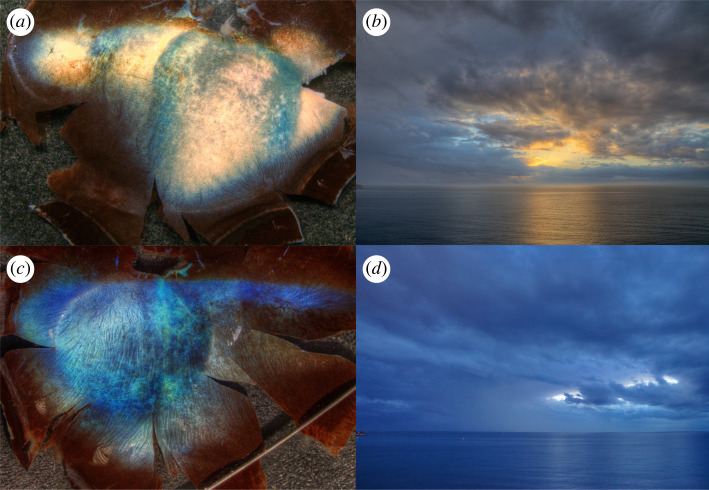
Figure 2. Representative image of the tapetum lucidum of a reindeer in the summer (a) and winter (c) months. Notice how the sky in the arctic circle is transformed from golden-blue in the summer (b) to dark blue (d) in the winter. Source
However, reindeer are unique. Their tapetum lucidum is composed of regularly spaced collagen fibers. When these fibers are normally spaced, the light reflected out of the eye appears gold (Figure 2). During winter, the collagen fibers in the tapetum lucidum become more tightly compressed as the reindeer’s eye dilates (Figure 3). As a result, the reflected light changes from gold to blue, giving reindeer their blue eyes. Scientists believe that this blue reflection might help scatter light throughout the eye, making reindeer more sensitive to the small amount of visible light available during the winter.
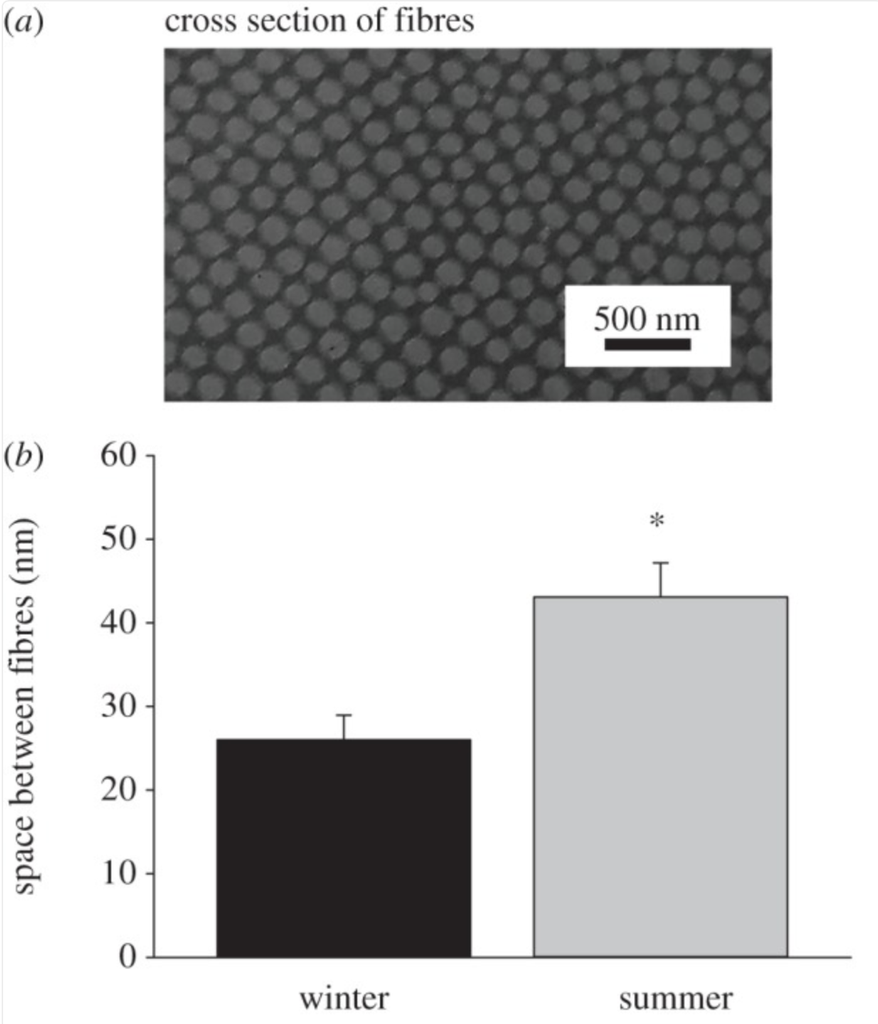
Figure 3. A. A cross section of an electron microscopy photograph of the tapetum lucidum. Each circle in the image is a collagen fiber. B. A graph showing the space between collagen fibers in the reindeer tapetum lucidum in the winter (left) and summer (right) months. Note how there is less space between the fibers in the winter. Source
Reindeer also have another amazing ability: they can see light on the UV spectrum. Winter light in the arctic circle has more UV rays, so an extended visual range allows reindeer to see better during the darker winter months. It is thought that this ability to see UV light is beneficial to a reindeer’s diet. Reindeer have a 60% lichen-based diet, mostly eating Cladiforna rangiferna. This lichen is highly reflective of UV light and it has been suggested that this ability to see UV light makes it so the reindeer can more easily spot it in the snow.
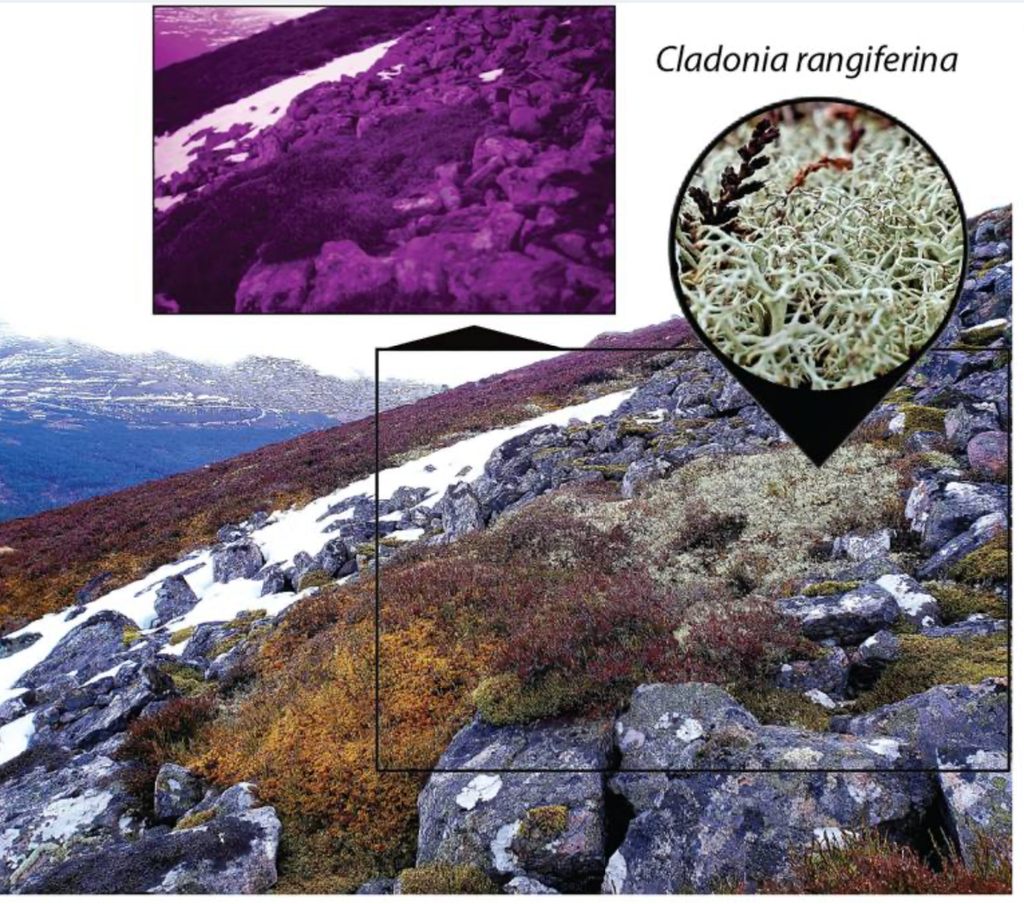
Figure 4. An image of the Cladonia rangiferina lichen. The purple inset is a depiction of the lichen under UV light. The lichen appears dark purple in UV light compared to the light purple rocks and white snow. Source
So, while Rudolph’s red nose is certainly the most famous part of his appearance, real reindeer have an amazing feature of their own: color changing eyes that allow them to survive the arctic winter!
