By Julia Riley
Gene therapy has been an increasingly popular topic of discussion in recent years. However, the evolution of gene therapy began as early as the 1960s, when scientists speculated that introducing DNA sequences into patients’ cells could cure genetic disorders.
But what exactly is gene therapy? Gene therapy aims to beneficially modify the expression of a gene, typically in genetic disorders. There are a few different ways that gene therapies can work (Figure 1). These techniques can provide a cell with a functional copy of a gene, use gene silencing techniques to inactivate a gene, or use precision tools to edit an existing gene. Over the past decade, there have been several FDA-approved gene therapy products for conditions such as cancer, muscular dystrophy, and sickle cell disease.
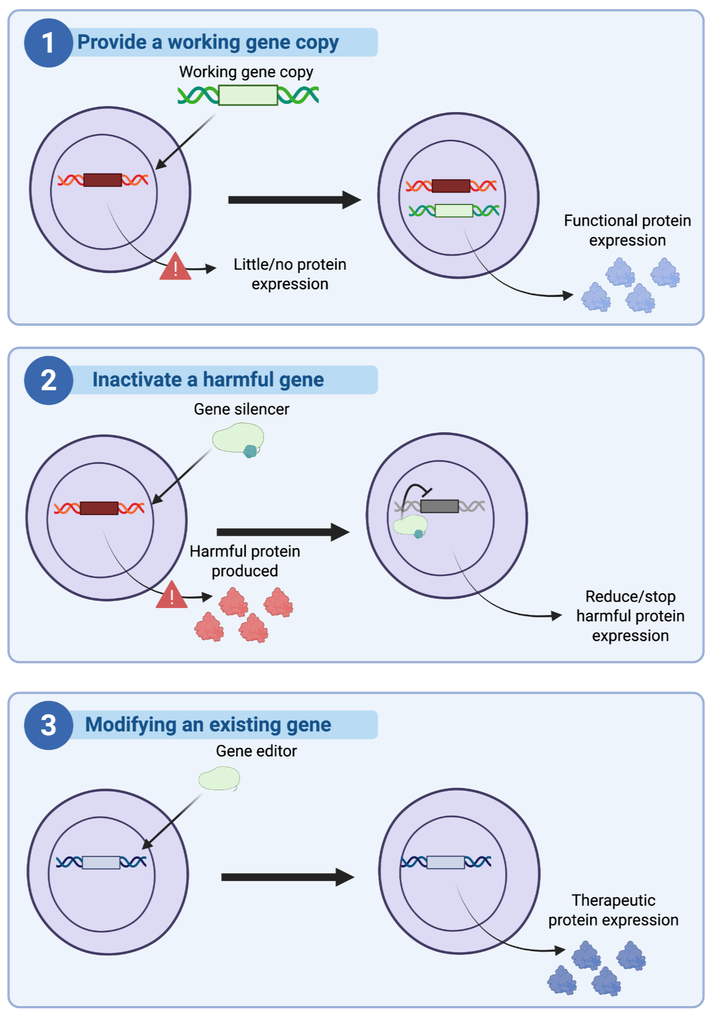
Figure 1. Three of the most common ways gene therapies achieve therapeutic effect (provided by the author using BioRender.com).
Gene therapy is a hot, yet debated, topic in both basic science research and clinical drug development because of its broad potential. Consider the following cases of genetic and cellular engineering. What are your thoughts?
- A person with a genetic muscle disease receives a gene therapy that repairs a mutated gene, restoring their ability to walk independently.
- An older adult who has begun to lose coordination and balance due to a genetic mutation receives a gene therapy that prevents further muscle loss and helps them maintain their independence.
- A healthy adult receives a gene therapy to alter an unmutated gene to prevent age-related muscle loss.
- A healthy athlete receives a gene therapy to an unmutated gene to increase their body’s ability to develop muscle mass.
In each of these scenarios, would you support the use of gene therapies, oppose it, or need more information? Some examples are easier to justify than others. However, some individuals would argue that if strict regulations aren’t established early on, gene therapy may spiral beyond its intended purpose of treating fatal diseases and reducing human suffering. Many would agree that correcting mutated genes associated with fatal diseases is necessary medical treatment. Where definitions begin to get a bit more murky is in the area of prevention. If an individual knows that, because of a genetic mutation, they are highly likely to develop a disease later on, is correcting this mutation an appropriate medical intervention? Beyond this ambiguous territory is the area of genetic enhancement. Would it be acceptable to alter traits, such as intelligence, athleticism, and physical appearance, that aren’t disease-related, but are instead purely elective?
Learn more through the following resources:
