by Margaret Dedloff
In the late 1940s and 1950s there were nearly 60,000 cases of polio in the United States alone, making it the worst polio epidemic to ever sweep the nation. Polio used to be a widespread and highly feared disease, but it is now something that belongs in a history book for most of the world. The last case of wild polio that occurred in the United States occurred in 1979. In 1988, the Global Polio Eradication Initiative was launched in an effort to try to get rid of polio across the world through vaccination. Today, the only countries where wild polio still occurs are Afghanistan and Pakistan, making us very close to getting rid of polio altogether.
Poliomyelitis, more commonly known as polio, is caused by infection with the polio virus. Polio virus is a single-stranded, positive sense RNA virus (Figure 1). This means that when polio virus infects a cell, it brings the recipe for proteins (RNA) with it. Additionally, poliovirus is a non-enveloped virus, which means that it doesn’t have a lipid membrane around it, just a protein shell. This is important because that means it is harder to kill through cleaning. When a virus has a lipid membrane, it is more easily dried out by heat and disinfected by household cleaners. The protein shell around nonenveloped viruses, like poliovirus, is much more protective against heat, disinfectants, and extreme pH, which makes it much harder to prevent the spread of poliovirus compared to other viruses, like the virus that causes COVID (SARS-CoV2). Poliovirus can survive at room temperature for many weeks!
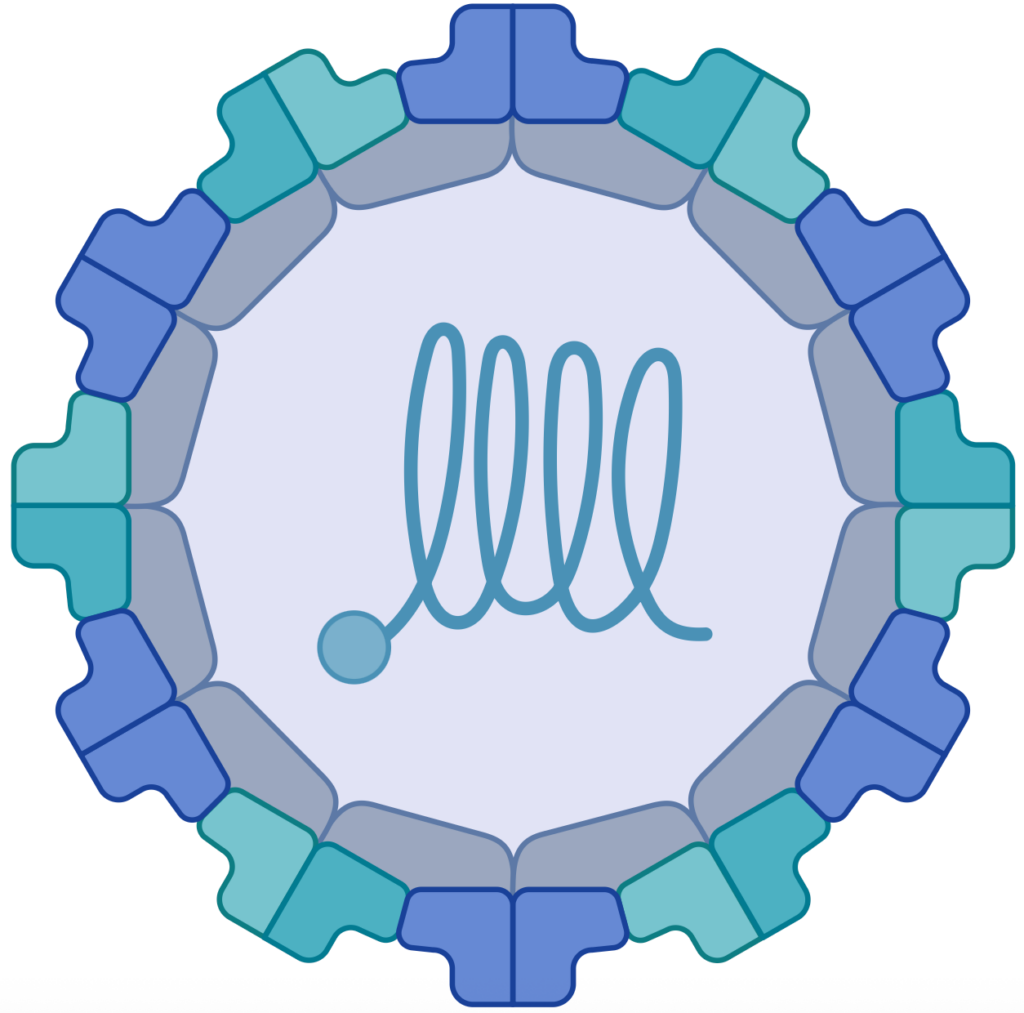
Figure 1. A drawing of poliovirus, showing the single stranded RNA in the middle of the virus. Image generated in Biorender.
Poliovirus is spread through the fecal-oral route, which means from the stool of an infected person to the mouth of an uninfected person. This can happen in many ways, including drinking contaminated water and poor community or personal hygiene. Poliovirus is very contagious; if one person in a household is infected, everyone else would be infected, too.
Most people infected with poliovirus will end up with no symptoms or very mild flu-like symptoms, including fever, fatigue, headache, and vomiting. Only a small percentage (0.5%) of individuals who become infected will develop paralysis, meaning that they will be unable to move parts of their bodies. In very severe cases, infected individuals could lose their ability to breathe on their own, which would require the use of a machine called the iron lung (Figure 2). The iron lung worked by using air pressure to inflate the lungs of the patient automatically so that they could breathe.
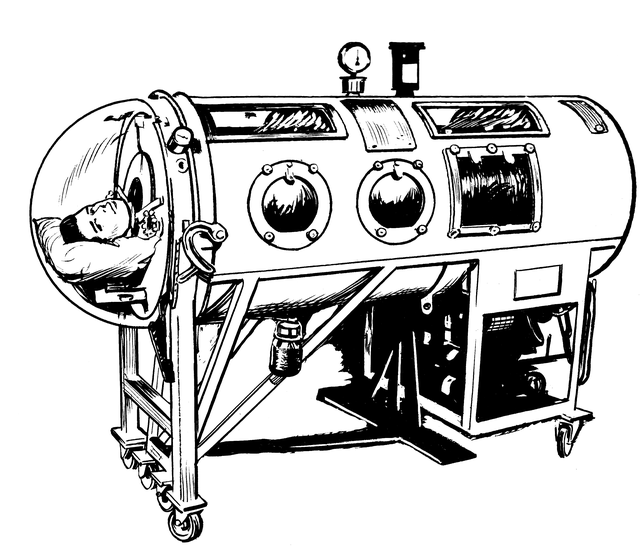
Figure 2. A sketch of an iron lung, showing a person in the machine. Image source.
In the early 1900s, poliovirus was a very common disease, with an average of more than 15,000 cases of paralysis caused by polio each year. Even president Franklin Roosevelt was infected with polio as a child and was paralyzed because of it. President Roosevelt used a wheelchair for the remainder of his life (Figure 3), but used a cane and support from others in public to make it appear that he could walk.
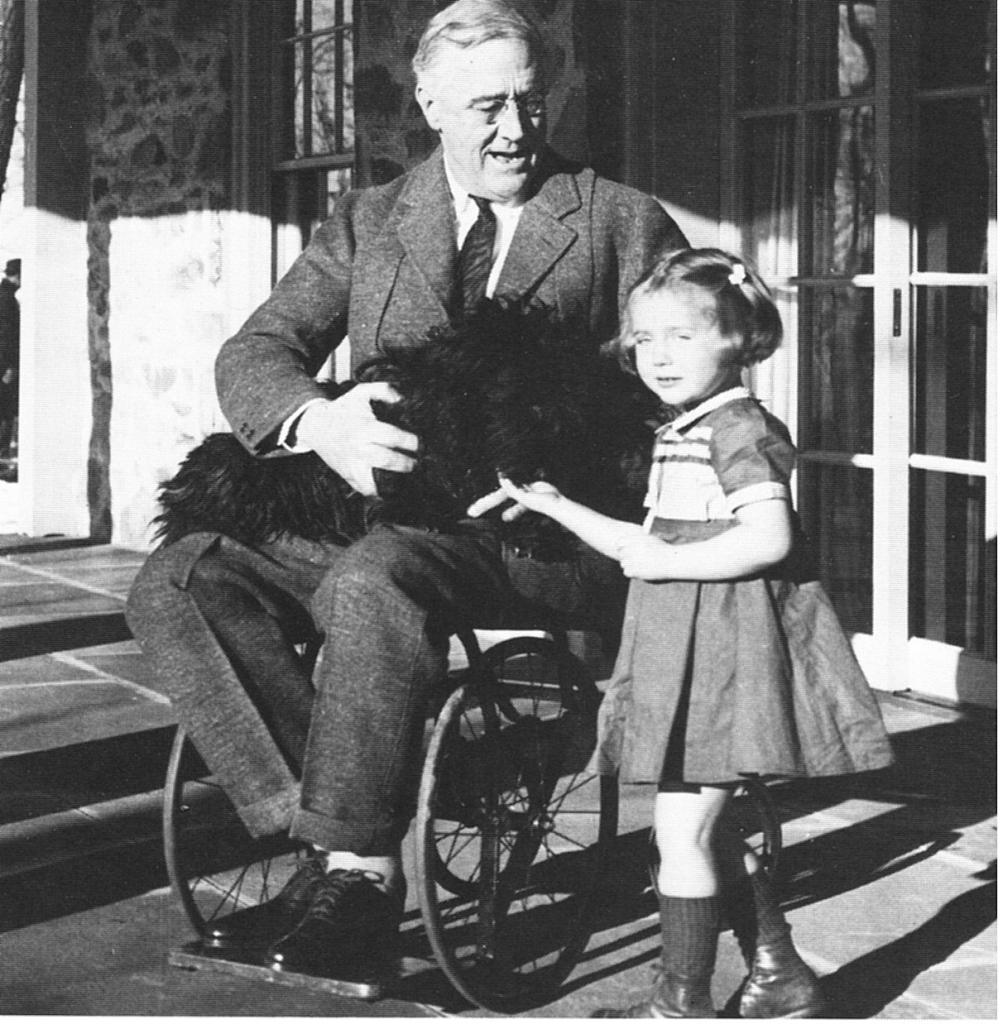
Figure 3. President Franklin Roosevelt in a wheelchair that he designed himself. Image source.
While president Roosevelt was one of the most prominent people affected by poliovirus, this disease affected millions of people around the world prior to the development of the poliovirus vaccine. In 1952, Jonas Salk, a scientist at the University of Pittsburgh, developed the first effective poliovirus vaccine. Salk killed the virus and then used it to create a protective immune response in patients, which is called an inactivated vaccine. The Salk vaccine worked very well, and was able to protect people from infection with poliovirus. In 1961, Albert Sabin developed another polio vaccine using a weakened version of polivirus, called a live vaccine. The Sabin vaccine is given orally, instead of being injected like the Salk vaccine (Figure 4). Oral vaccines are very useful because they are easy to administer and are cheaper to manufacture, making them important tools for controlling infection in lower-income countries. Both the Salk and Sabin vaccines were crucial for decreasing the amount of polio infections throughout the world.
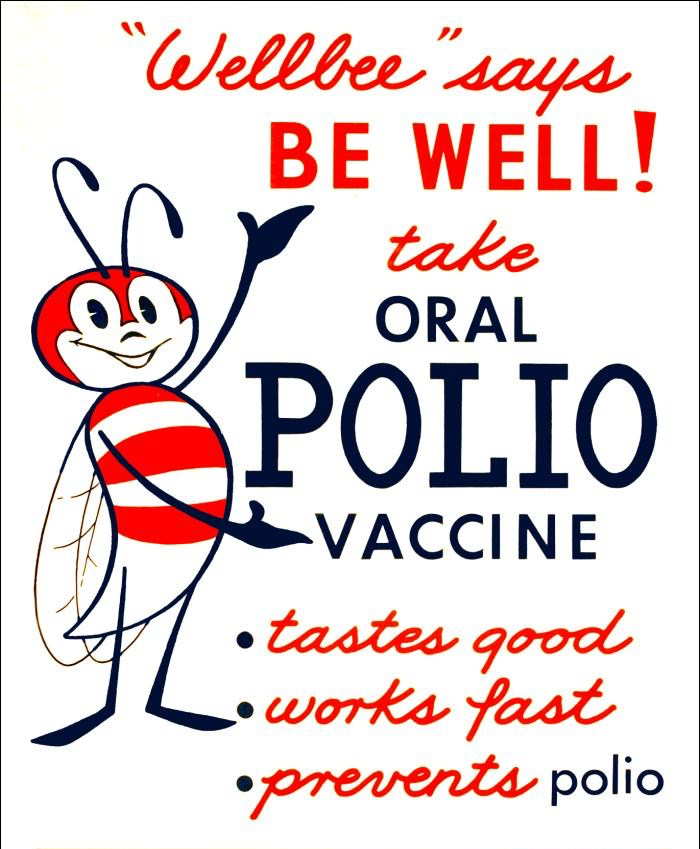
Figure 4. A 1963 poster from the CDC advertising the Sabin polio vaccine. Image source.
Today, there are only two countries that have poliovirus circulating, making us very close to eradicating poliovirus. This would make it the second disease to ever be fully eradicated with smallpox considered fully eradicated in 1980. Polio plays an important part in our history and hopefully one day soon, that’s all it will ever be!

.png)

