(noun. /HIS-tone dee-uh-SEH-tih-lays/)
by Asjah Wallace
What does it mean?
Over 6 feet of DNA is tightly packed into the nucleus of a single human cell. This is achieved using proteins called histones that provide a structure for the DNA strand to wrap around. When this condensed structure of DNA, heterochromatin, is formed, access to the DNA is blocked and genes are silenced. In contrast, active gene expression occurs when DNA is more loosely packaged in a euchromatin structure. One of the ways DNA can transition between a condensed chromatin structure (heterochromatin) and relaxed chromatin structure (euchromatin) is through histone deacetylases (HDACs).
HDACs are a family of enzymes that cause the DNA to tighten around the histone proteins and block gene expression. To do this, HDACs interact with histones to remove a specific molecule, called an acetyl group, that reshapes the chromatin into a condensed structure.
How do I use it in a sentence?
In cancer, HDACs can become more active and promote tumor growth by silencing genes that tell tumor cells to stop growing.
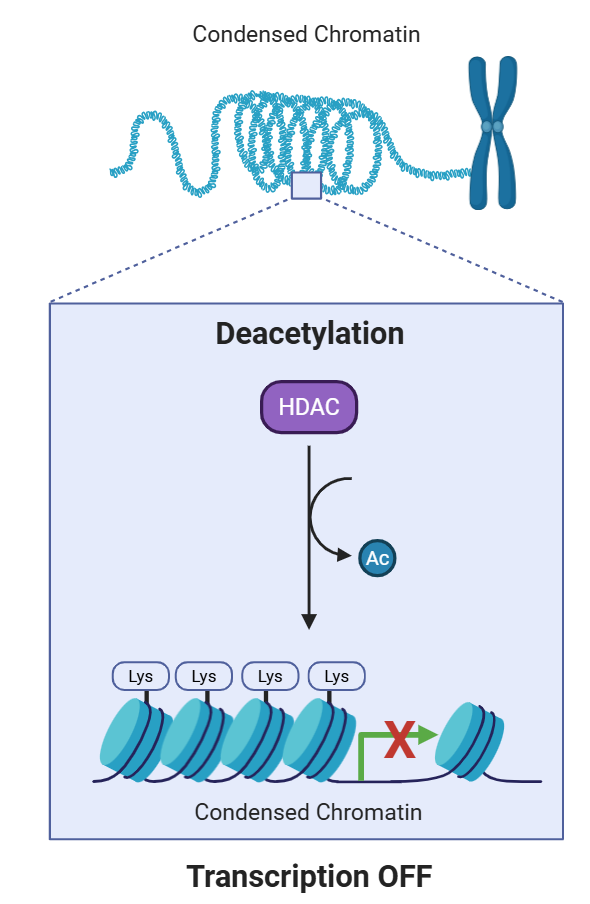
Figure 1. Deacetylation by HDACs. This image shows the condensed chromatin structure of DNA as a result of the removal of the acetyl group from histones by HDACs.
Source: Image made by author using Biorender.
