By Caroline Aufgebauer
Viruses have one mission: replicate, replicate, replicate! To fulfill their destiny, viruses infect cells and hijack the molecular machinery within to make more copies of their viral genome. However, cells are equipped with proteins that detect these invaders and send warning signals to attack them. Thus, a successful infection is entirely dependent on the virus’s ability to evade the cells in an epic game of hide and seek, and COVID-19 is a prime example of a virus that has become very good at hiding.
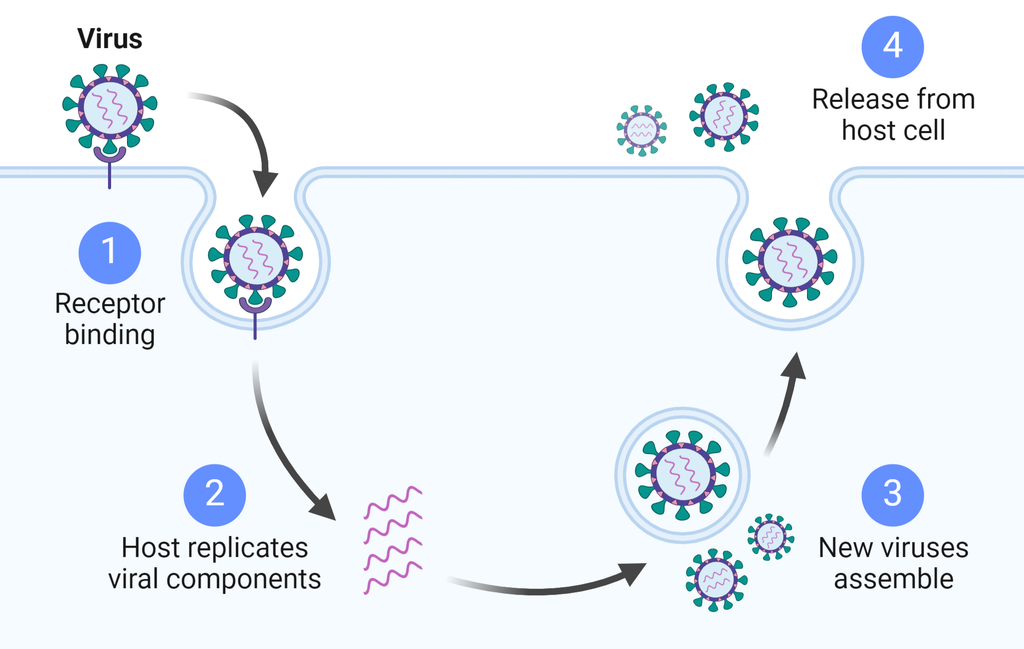
Figure 1: A simplified viral life cycle of COVID-19. The life cycle consists of multiple key stages: recognition of the virus by host cell receptors and entry into the cell, viral RNA replication, assembly of virions, and release of mature virions that infect other cells. Image generated by author using BioRender.
When the COVID-19 virus infects a cell, it releases its RNA genome into the cytoplasm. Cells detect infection by sensing the presence of these viral RNAs. But, they also contain many of their own RNA molecules. So how is the cell able to tell the alien viral RNA apart from its own RNA? One of the biggest differences between viral and cellular RNA is simply their length. The COVID-19 viral RNA strand is nearly 15 times longer than the average length of a human cellular RNA! This viral RNA is not just a long, floppy string though. The RNA folds onto itself to form double-stranded regions that give the viral RNA structural dimensionality. Long regions of double-stranded RNA are one of the hallmarks of viral RNA. Cells have proteins that are specialized to detect these unique features and sound the alarms. With that, let the game of hide and seek commence!
What would you do to avoid being spotted by the cell’s seekers? The most obvious change would be to shorten the viral RNA to make it more similar in length to cellular RNA. However, viral RNA contains instructions for making proteins that copy the viral genome and package it into new viruses. Paring down the RNA would result in the loss of important proteins for the virus. Thus, viruses often use alternative strategies to mimic cellular RNA.
Length is not the only feature that helps cells distinguish between viral and cellular RNAs. Another key difference between the two is the type of cap that they have. When a new cellular RNA molecule is made, enzymes modify the beginning of the RNA by adding a specialized RNA nucleotide. This cap protects the RNA from degradation and helps translate it into protein. It also helps the cell recognize its own RNA molecules. But, COVID-19 doesn’t give up easily. It takes advantage of the cell’s screening efforts and fools the cell into thinking that it is a cellular RNA by modifying its own cap as well. It would be like wearing a red shirt to Target to fool everyone into thinking you are an employee!
As we all know, the key to winning a game of hide and seek is to have a great hiding spot. COVID-19 doesn’t just find a good hiding spot, it makes its own hideout! When the virus infects a cell, it remodels cellular membranes to create bundles in the form of double-membrane vesicles that enclose the viral RNA and its copy-making proteins. This setup allows the viral RNA to churn out copies of its genome without detection by the cell’s seekers. Ultimately, the result is a successful viral infection as each copy is released and can spread to infect other cells.
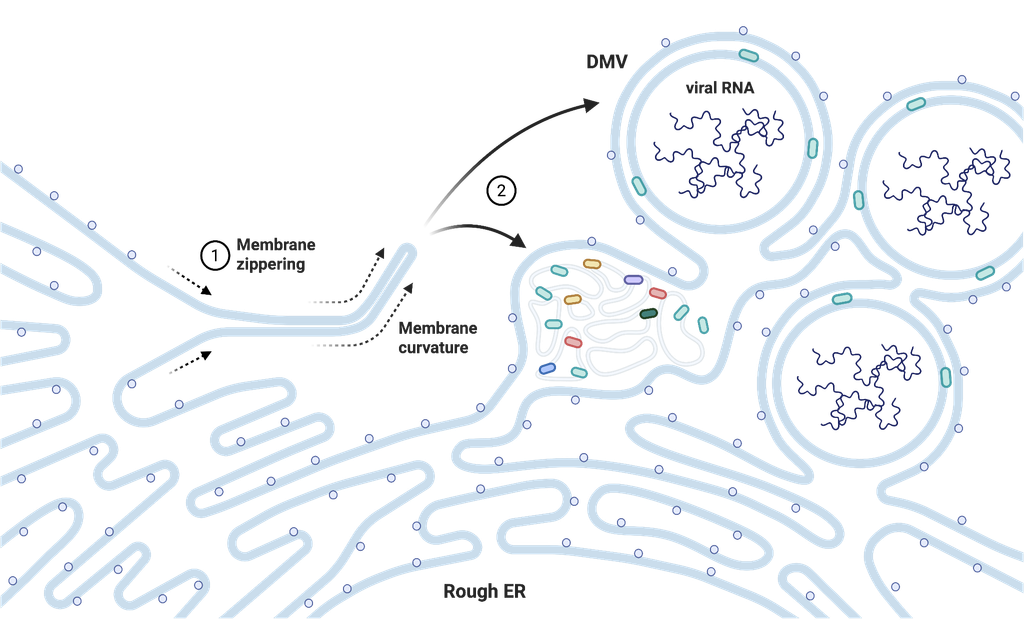
Figure 2: Graphic showing double-membrane vesicles (DMVs) containing viral RNAs. Image generated by author using BioRender.
Not every game of hide and seek is the same. It depends on the skill of the hiders and seekers and the strategies used in the game. Likewise, not every person has the same immune system training when they are exposed to COVID-19. Elderly and immunocompromised individuals are much more prone to getting sick as their cells often have weaker “seekers” that fail to detect invading viral RNAs. People with healthy immune systems aren’t off the hook, though, as many of them have also gotten sick with COVID-19. This is, in part, due to the many mutant strains of the virus that have arisen. Some of these are much better “hiders” than others and use unique strategies to win against even the most healthy “seekers.”
So what can we do to help ensure victory for our cells? While the outcome of a waged match between virus and cell is often out of our control, vaccinations can pack a punch against viral infections before they even begin. Getting a vaccine is like showing your cells a wanted poster of the virus. It makes the cell aware of what the virus looks like so that it can prepare defenses and quickly target the virus upon actual arrival. After all, imagine how much harder it would be for you to play hide and seek without knowing what the hiders look like.
P.S. You can learn more about the COVID-19 mRNA vaccine here!
