By Ana Cunningham
Mosquito-borne diseases are among the leading causes of illness worldwide, especially in low- and middle-income countries (LMICs). In the science of infectious disease, mosquitoes are known as vectors – secondary species that transmit infectious pathogens to humans. These “vector-borne” diseases are difficult to combat without a clear picture of where outbreaks are most likely to occur. Paradoxically, while LMICs have the highest disease burden worldwide, they are also often the least equipped to combat these outbreaks. Doctors and scientists who study infectious diseases (called epidemiologists) try to detect pathogens using one of two main approaches (Figure 1). The first approach occurs when an influx of symptomatic patients arrives; epidemiologists then perform contact tracing to identify a common source of infection (for example, an area with stagnant water that supports a large mosquito population). Then, they can identify the causative agent in the mosquito, often a virus or other parasite, and only after these steps can they begin an effective treatment plan. While this approach has its strengths, it would be better to sample directly from the source. This approach is called metagenomics, in which you sample the genomic material from mosquitoes rather than from the patients they infect.
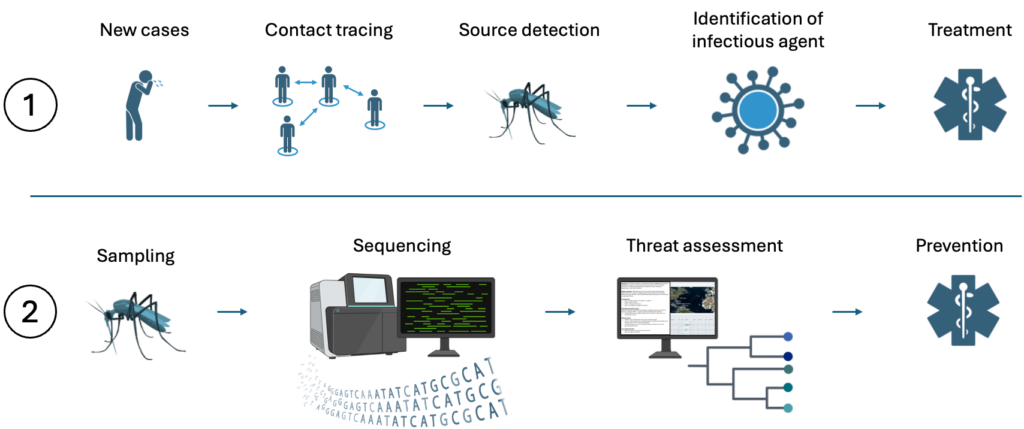
Figure 1. Two approaches for pathogen detection. (1) In the traditional approach, treatment occurs after contact tracing, source detection, and identification of the causative agent. (2) In the second approach, the disease-transmitting mosquitoes are sampled directly, and sequencing their DNA reveals which viruses and other diseases they may carry, allowing us to prevent future outbreaks. Created using BioRender.
What is metagenomics? Genomics is the study of all the genetic material in an organism, so metagenomics, by extension, is the study of all genetic material in a group of organisms. For example, your stomach is filled with millions of bacteria that help you digest food; gut metagenomics would refer to the study of not only your DNA but all the DNA of all the bacteria in your stomach and intestines as well – this is called your gut microbiome. We can apply the same concept to mosquito-borne diseases by looking at the genomic sequences of all viruses and other pathogens in mosquitoes, and scientists can match those sequences to specific viruses and assess their ability to make people sick.
Both approaches have their pros and cons. However, whereas the first approach is inherently reactive (people need to get sick before testing) and relatively invasive (testing requires drawing blood), the second approach is inherently proactive (no positive cases required) and noninvasive (mosquitoes are sampled instead of people). This approach is still being developed, but researchers have already begun demonstrating its ability to detect viral pathogens in mosquito DNA.
Here’s how it works: Mosquitoes are first captured at sites that are under surveillance for emergent viral outbreaks, such as West Nile Virus in North America. Scientists extract their RNA and sequence it to get a clear picture of all the RNA from both mosquitoes and the pathogens they carry. From these sequences, scientists can detect viral genomic material from a small subset of total RNA. They can then search through online databases to assess the relative risk of these viruses infecting humans, either by accessing prior studies on the viruses or hospital records. Public health officials can then use that information to plan for these outbreaks if they occur and to treat ongoing outbreaks more effectively.
As you can imagine, there is a huge potential for metagenomics to revolutionize the way we think about infectious disease, especially in lower- to middle-income countries. The COVID-19 pandemic was one of the most striking examples of what can happen when viral outbreaks get out of control, and tools like metagenomics will allow us to take that control back, creating a world in which we can not only combat ongoing outbreaks but also predict and prevent future ones.
Edited by Yasemin Cole
