by Fahmida Alam
Coxsackieviruses (kok-sak-ee-VY-rus) are viruses that spread through the fecal-oral route and can cause mild flu-like symptoms (e.g., fever, headaches, muscle aches) in most cases. Occasionally, these viruses can cause serious neurological symptoms that require medical attention. These viruses were named after the village of Coxsackie in upstate New York, where Coxsackievirus was discovered by the New York State Department of Health in the 1940s. The better-known viruses in the same family include polioviruses and the hepatitis A virus. Coxsackieviruses are among the non-polio enteroviruses, which cause millions of viral infections each year, particularly in the summer and fall months.
Not every human virus can infect every tissue in the body. A combination of factors dictates virus tropism, which is the virus’s ability to enter and establish infection in specific tissues. Coxsackieviruses can infect a wide range of human tissues, including, but not limited to, the lungs, heart, liver, and pancreatic islet cells (Image 1). Cell-surface proteins, called the coxsackievirus and adenovirus receptor and decay-accelerating factor, mediate entry of these viruses into cells. Due to a wide range of tissue infections and the subsequent immune response, the disease manifestations of these viruses are diverse and can include type 1 diabetes, meningitis, encephalitis, and myocarditis, among others.
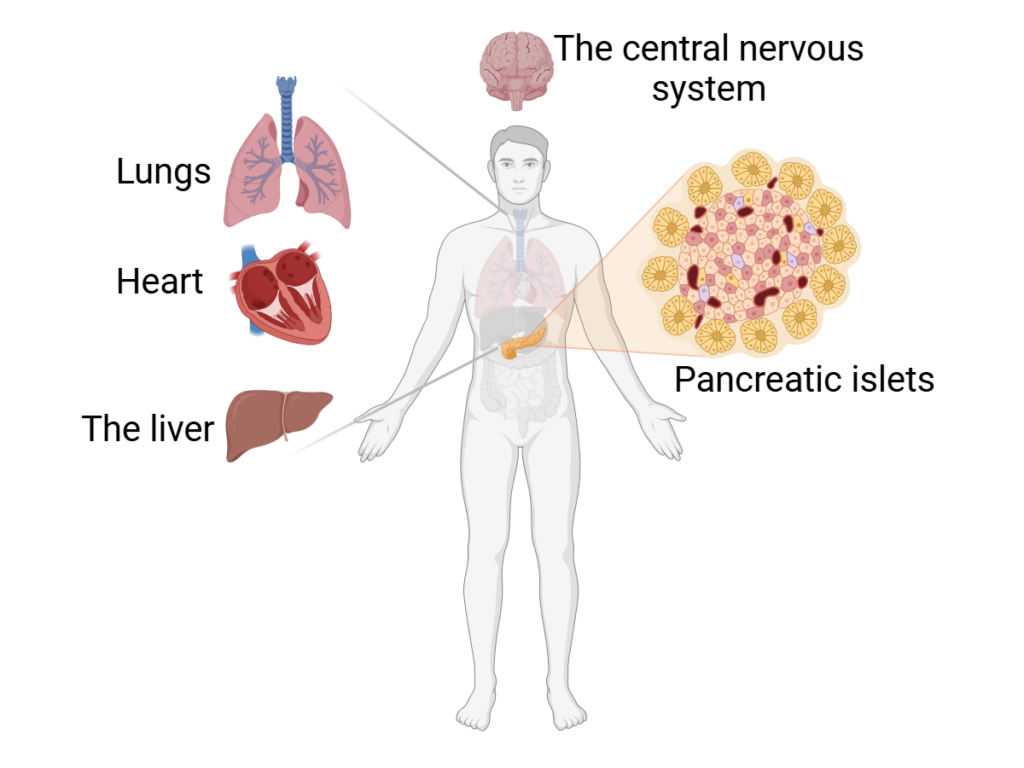
Image 1. Coxsackievirus tropism. A generic human anatomy illustration highlighting some organs infected with coxsackieviruses. Created by the author using BioRender.com.
These viruses are positive-sense (5’to 3’) single-stranded RNA viruses, meaning they contain all their genetic information in a single piece of RNA that can be translated by the host ribosome immediately upon infection. Viruses require a means to safeguard this information until entry into cells, such as through encapsidation. Coxsackievirus RNA is encapsidated by three structural proteins encoded by the virus (Image 2). These compact protein shells make these viruses very stable at high temperatures, resistant to traditional disinfectants, and they can survive outside the body for several days.
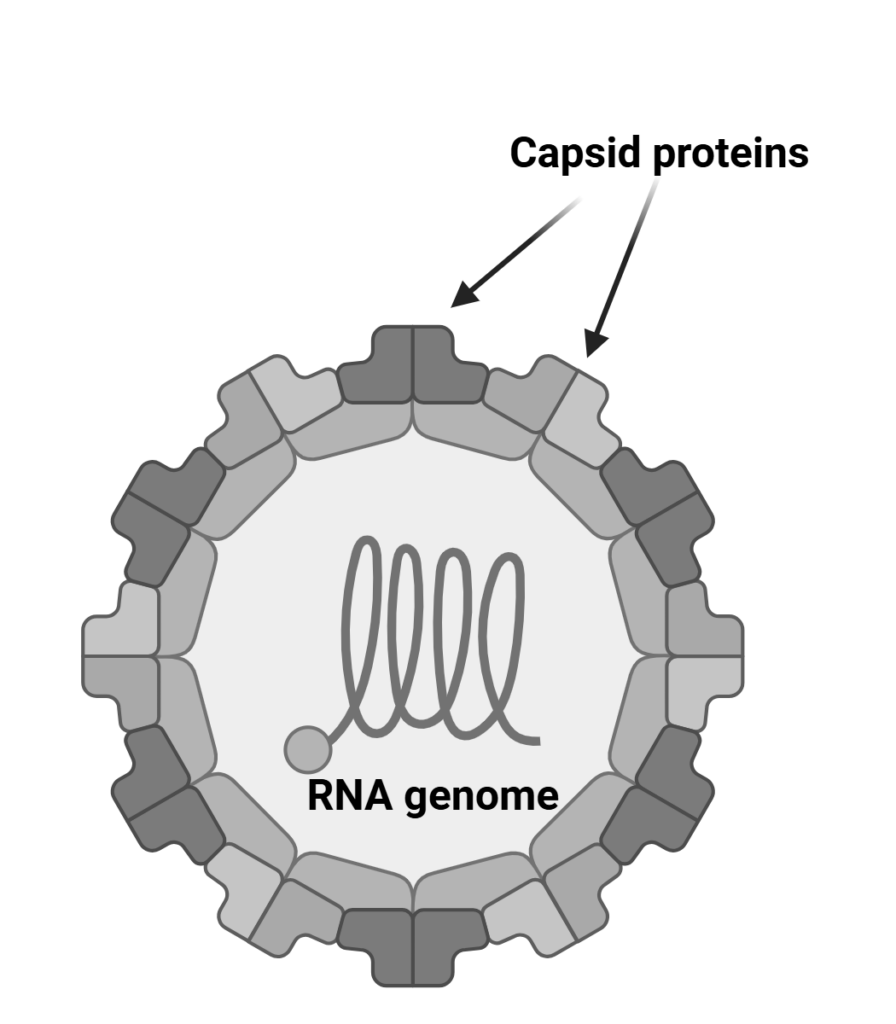
Image 2. A schematic of Coxsackievirus structure and genome. A positive-sense, single-stranded RNA genome is encapsulated by viral structural proteins. Created by the author using BioRender.com.
Coxsackievirus infection is prevalent worldwide. There is no vaccine for coxsackievirus infection. Coxsackievirus can be very contagious. What can you do to protect yourself from these viruses? The best way to prevent these infections is to practice good hand hygiene and clean hard surfaces.
